

Before your mastectomy, prepare front-opening clothes, arrange hands-on help at home, and practice drain care with your nurse so everyday tasks feel more manageable during recovery. Survivor-informed mastectomy recovery tips often center on these small details: reaching a mug, washing your hair, or getting dressed without pulling a top over your head.

You deserve comfortable recovery clothing and clear instructions before you leave the hospital. Having essentials within reach gives you more room to rest, while a written plan helps the people supporting you know what to do.
Your recovery will reflect your surgery, any reconstruction, and your health. Use survivor experiences as preparation ideas, with your surgical team’s instructions guiding wound care, garments, and activity. For an overview of the procedure itself, read what to expect before, during, and after mastectomy surgery.
What Can Feel Unexpected in the First Days After a Mastectomy?

You might notice tightness, changed sensation, and fatigue alongside pain in the first days. Before discharge, you need a clear plan for managing symptoms and reaching your team after hours.
Pain, Tightness, and Fatigue Can Feel Different for Everyone
Your discomfort might feel like pressure across your chest, soreness near an incision, or pulling when you move. If you have tissue expanders, you might notice firmness that makes finding a comfortable position harder.
Keep a brief record of your symptoms and when you take medicine. Include whether discomfort interrupts sleep or makes walking difficult, so your team has useful details when adjusting your care.
Follow your prescribed pain plan, including instructions for side effects such as nausea or constipation. You deserve help with pain before it becomes hard to manage.
Numbness Can Affect the Chest and Underarm
You might have numbness or changed feeling across your chest and under your arm because surgery affects nerves. Tingling, itching, or brief shooting sensations are also possible during healing.
Some feeling returns slowly; some areas remain numb long term. Your surgeon can explain what to expect based on your procedure, including lymph node surgery.
Protect numb skin from heating pads, ice packs, and hot water unless your team gives specific instructions. Check your skin visually because sensation alone might fail to warn you about irritation or heat.
Ask for a Hands-on Drain-Care Demonstration
Before going home with surgical drains, ask your nurse to demonstrate emptying, measuring, and securing the drain bulbs. Then practice while your nurse watches, with your support person present if possible.
Your written instructions should explain:
- How to wash your hands and handle each drain.
- How to measure and record output from each bulb separately.
- How to restore the suction your drain requires.
- Where to pin or clip the bulbs without pulling the tubing.
- Whether you should strip or milk the tubing, and exactly how.
Pin only to the clothing or tab your nurse recommends, keeping the pin away from the tubing. Drain removal depends on your surgeon’s criteria, including fluid output, so keep your log available for follow-up visits.
For a refresher at home, Memorial Sloan Kettering’s patient guide to caring for a Jackson-Pratt drain walks through milking the tubing, emptying the bulb, and keeping a drainage log. Treat it as a review, with your own discharge instructions taking priority.
Know Which Symptoms Mean Calling Your Care Team
Before discharge, get written warning signs and the daytime and after-hours phone numbers. Call promptly for fever at your team’s stated threshold, spreading redness, worsening warmth, foul-smelling drainage, or increasing pain.
Report sudden swelling, fresh heavy bleeding, a drain that comes out, or a sudden change in drainage. If you have reconstruction, follow any extra instructions about changes in skin color or temperature.
Call 911 for trouble breathing, chest pain, fainting, or other signs of an emergency. Your discharge plan should also explain what to do if you cannot reach the surgical team.
What Should You Set Up at Home Before Your Mastectomy?
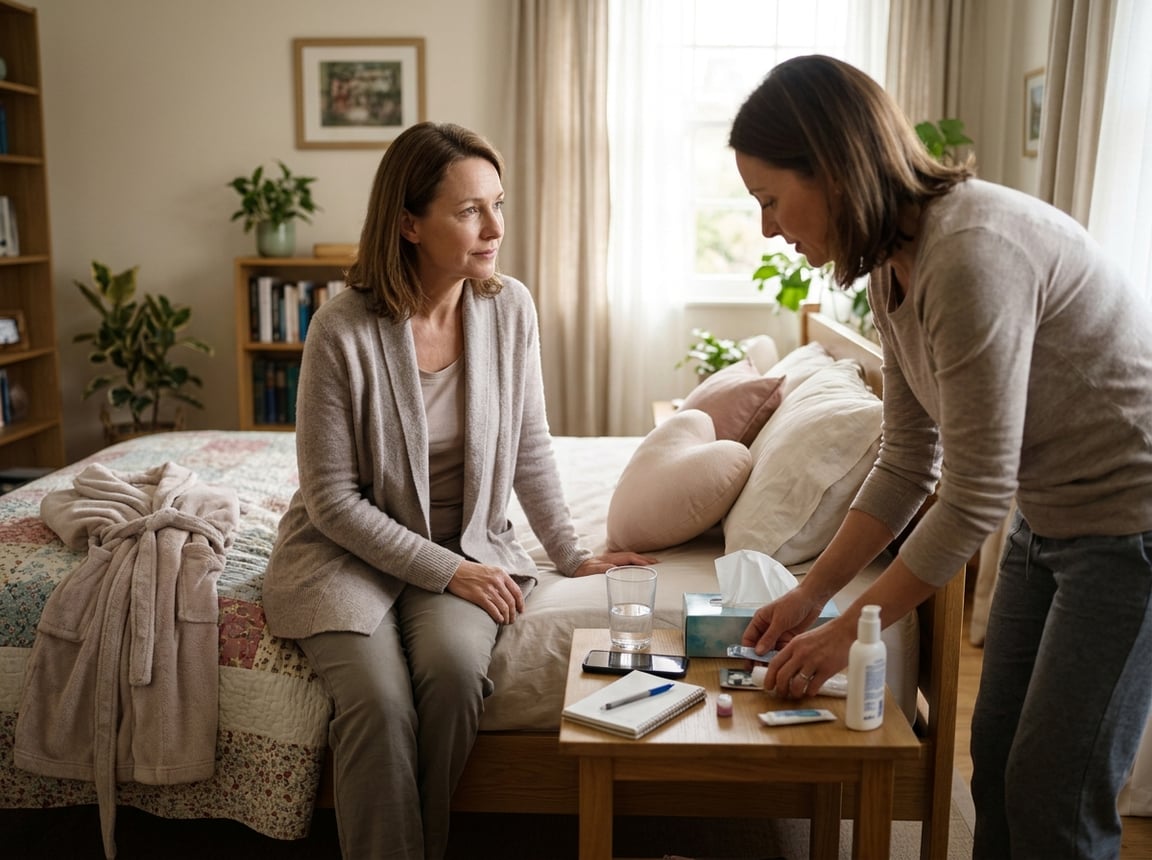
Prepare a reachable rest area and arrange dependable help before surgery. Your first weeks will be easier to organize when meals and lifting tasks already have someone assigned to them.
Gather the Essentials and Put Everyday Items Within Reach
The most useful things you need after a mastectomy are the items you use every day, placed where reaching feels easy. Before surgery, walk through your normal routine and notice anything stored overhead or near the floor. If you are also packing for your hospital stay, our mastectomy hospital bag checklist covers what to bring.
Set up a small recovery area with:
- Your medication list and discharge instructions.
- Water in a lightweight container.
- A phone charger and care-team numbers.
- Your drain log and measuring supplies.
- Tissues, glasses, and a few comfort items.
- Pillows arranged according to your team’s positioning advice.
Move dishes and toiletries to waist-level shelves. Choose smaller containers for heavy liquids, and keep walking paths clear of cords or loose rugs.
Ask for Specific Help With Meals, Rides, and Household Tasks
Arrange help at home for meals, rides, and tasks affected by lifting limits in the first weeks. A clear request is easier to fulfill than a general offer of support.
Your schedule might assign someone to bring dinner, collect prescriptions, handle laundry, or take children to school. Include pet care, especially if walking your dog involves pulling on a leash.
If you live alone, tell your surgical team before your operation. You need a safe discharge plan, including a ride home and the supervision required after anesthesia; a social worker can help you explore practical support.
How Can You Sleep More Comfortably After a Mastectomy?
For how to sleep after mastectomy, start with the position your surgeon recommends for your procedure. Ask whether you need to sleep on your back or keep your upper body raised, especially after reconstruction.
A wedge pillow or recliner helps some people settle comfortably. Small pillows supporting your arms are another option if your team approves the placement and they stay clear of incisions and drains.
Practice getting into and out of your planned sleeping space before surgery. Ask your nurse to show you a safe technique that follows your restrictions, particularly if you also have an abdominal incision.
Which Clothes Make Dressing Easier After a Mastectomy?
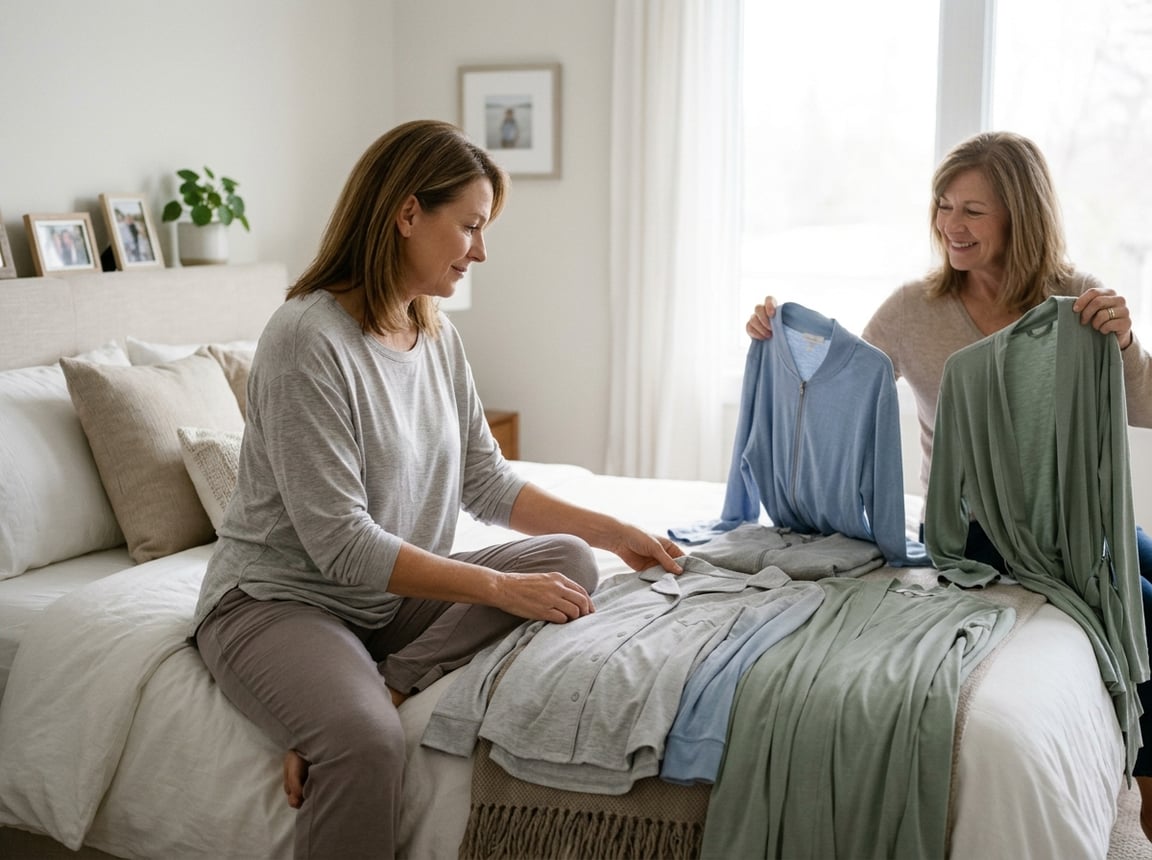
Front-opening clothes reduce the reaching involved in getting dressed. Choose roomy layers with easy closures, while keeping any prescribed surgical garment as your first priority.
Choose Front-Opening Tops and Soft Layers
Prepare front-closure bras and button-up tops you don’t pull over your head, along with loose pull-on bottoms. Larger buttons or zipper pulls are easier to handle when you feel tired or sore.
Leave enough room for dressings and drain bulbs. If your reconstruction uses tissue from your abdomen, such as a DIEP or TRAM flap, choose a waistband that sits away from the healing area.
Soft cotton camis work as light layers once putting them on fits your movement limits. Meadow’s Luna Cotton Cami is listed at $25, though a pull-on cami still requires enough shoulder movement to dress comfortably.

Ask When You Can Switch From Your Surgical Bra
Your surgeon should decide when you can change from a prescribed surgical bra to an everyday recovery style. Ask about the support required, how long to wear the garment each day, and whether you need a spare for washing.
A comfortable retail bra serves a different role from prescribed compression garments or surgical support. Follow your team’s instructions even if another style feels appealing.
Meadow’s post-surgery bras, including Wilderness and Hero, are designed for the stage after your care team says the surgical bra is no longer required. Keep in mind that clearance to change bras and clearance to exercise are separate decisions.
Look for Gentle Fabrics, Easy Closures, and Flexible Fit
Look for wire-free construction and soft seams, with closures that sit comfortably against your skin. Check that the band stays clear of sensitive areas and that pockets or pads feel comfortable.
For a zip-front bralette that doesn’t go over your head, the Wilderness Front-Closure Cotton Bralette is listed at $60. Its features include cotton-modal fabric, a cotton lining, adjustable straps, breast-form pockets, and removable lightweight pads.
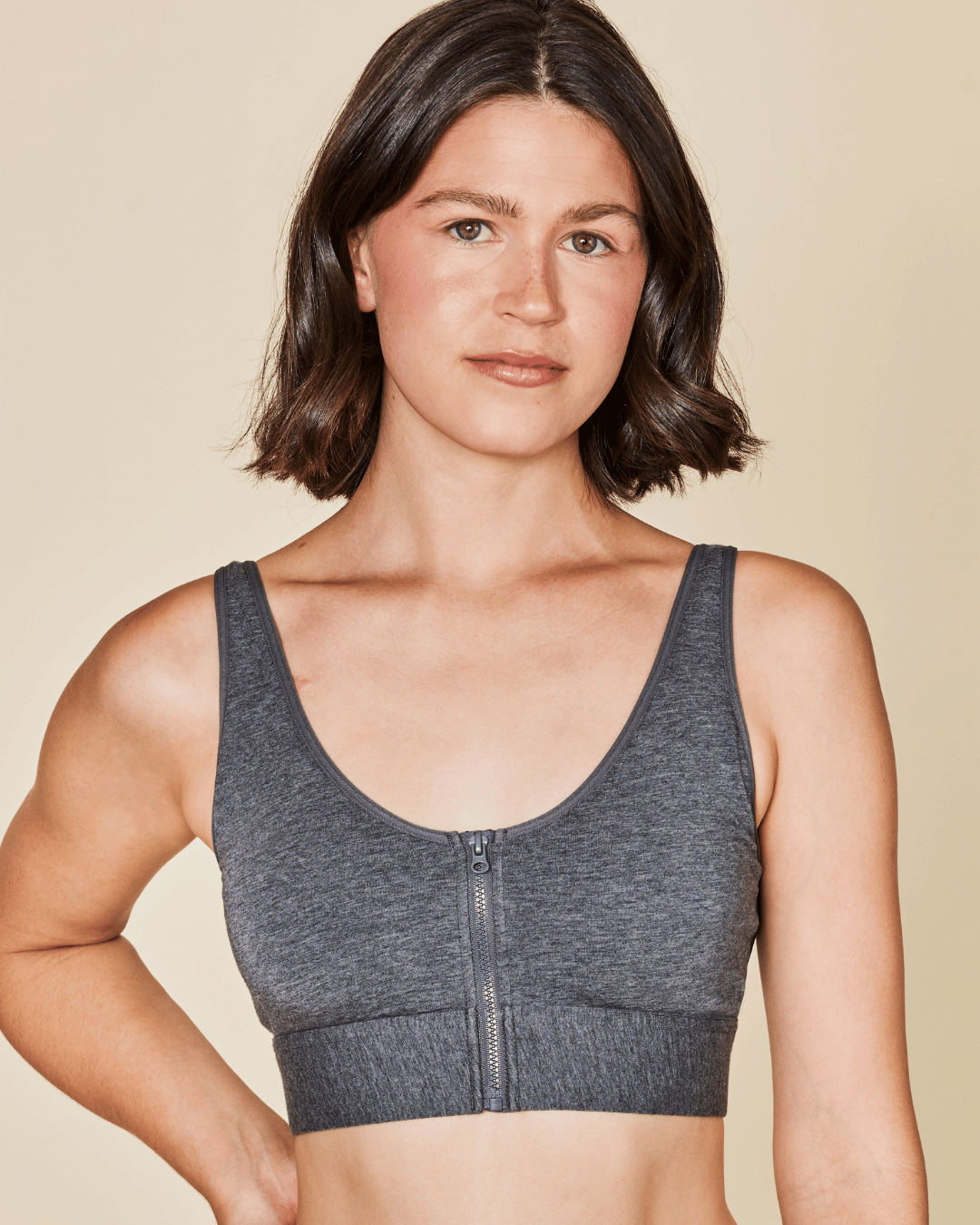
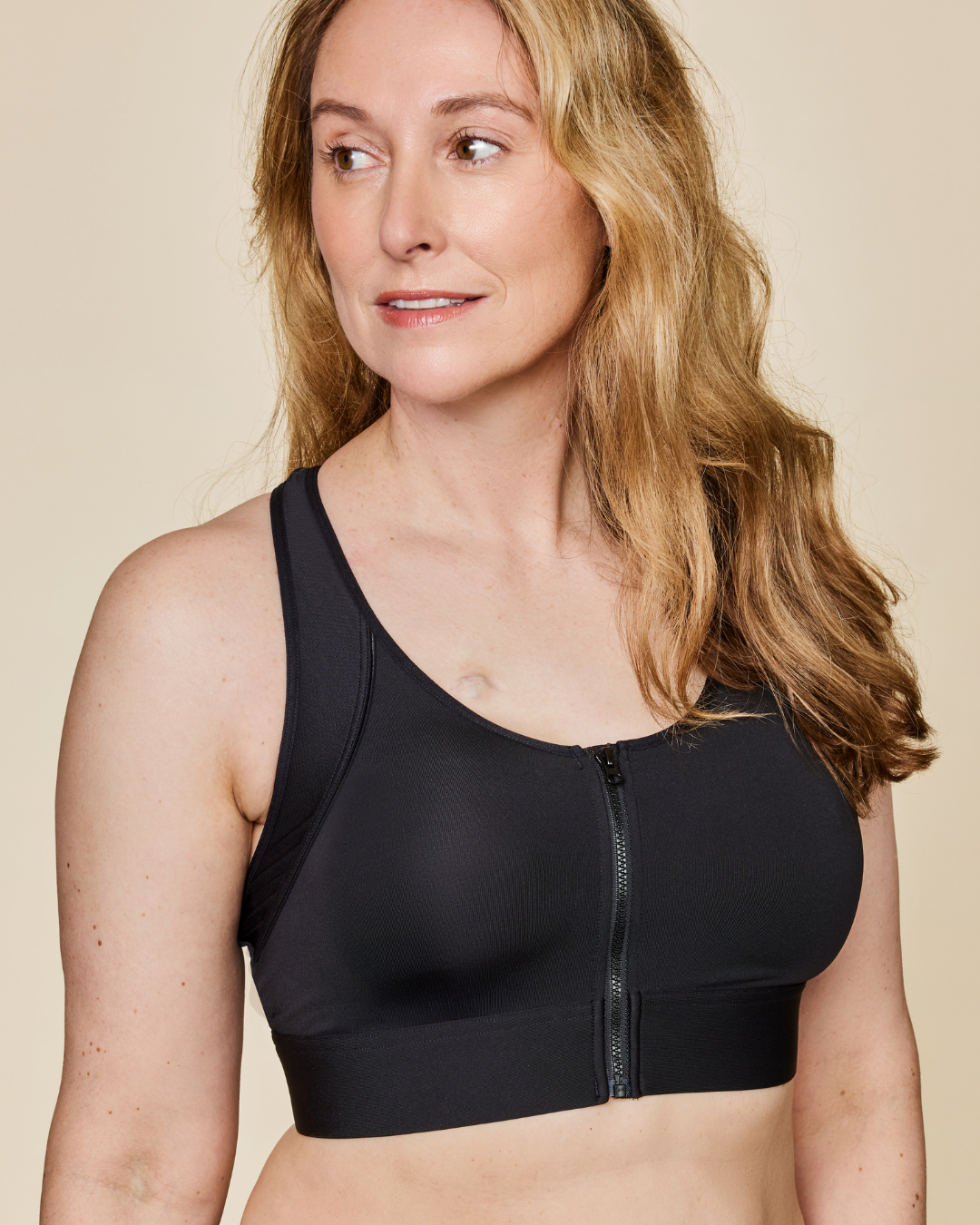
Once your team clears light movement, a light-support front-zip sports bra is another option. Meadow’s Hero Front-Closure Sports Bra is listed at $60 and described for light workouts and lounging, with pockets for breast forms; your recovery instructions still determine suitable activity.
Check Fit Support and HSA or FSA Eligibility Before Buying
Check the size chart for each style of front-closure mastectomy bra because sizing systems differ. If you wear breast forms, measure with them in place when following the relevant fitting guidance.
Meadow provides a bra fit guide and free sizing consultations by email at info@meadowforall.com. The fit guide suggests sizing up when substantial post-surgery swelling is present, with individual fit advice useful when measurements fall between sizes.
Through Meadow’s partnership with Flex, you may qualify to pay with your HSA or FSA for eligible purchases. Some items also need a Letter of Medical Necessity, which Flex can provide through a brief telehealth chat at checkout, so check your eligibility and documentation requirements before budgeting around those funds.
How Do You Return to Movement Without Rushing Recovery?
Return to movement through your team’s walking and exercise plan, with clear limits on lifting and reaching. Feeling better is a reason to review your next step, while your restrictions remain in place until your team changes them. Our guide to exercising after a mastectomy covers each stage in more detail.
Clarify Your Lifting and Reaching Limits Before Discharge
Ask for your lifting limit in pounds and how long it applies. Also clarify pushing and pulling, which affect tasks such as opening heavy doors or moving a vacuum.
Ask specifically about reaching overhead, carrying a handbag, lifting a child, and walking a dog. These everyday movements are easy to overlook during a discussion focused on exercise.
Keep your restrictions where your helpers can see them. Give heavy chores to someone else even on a day when you have more energy.
Ask Early About Shoulder Exercises and Physical Therapy
Discuss range of motion before surgery, including arm and shoulder stiffness and when physical therapy would help. Ask which exercises start first and whether reconstruction changes the plan.
Have a clinician demonstrate the approved movements, then repeat them so your technique can be checked. Your instructions should state how far to move and what symptoms mean stopping. The American Cancer Society’s guide to exercises after breast cancer surgery, developed with input from physical therapists, shows commonly recommended stretches; check with your team before starting any of them.
Report persistent shoulder limits, increasing tightness, new arm swelling, or a pulling cord under your arm. Early assessment helps your team choose suitable rehabilitation.
Plan for a Gradual Return to Work and Everyday Activities
Build a return plan around your job’s demands and your stamina. Working from home still involves sustained attention, typing, and sitting in one position.
Discuss shorter days or a phased schedule with your employer when possible. Leave room for follow-up appointments and any further treatment.
During recovery, alternate approved activity with rest. If an activity increases pain or swelling, stop and ask your care team how to adjust your plan.
What if Emotional Recovery Takes Longer?
Your emotional recovery deserves support even after your incisions heal. Relief, grief, fear, and uncertainty all deserve room without a deadline for feeling comfortable in your body.
Seeing Your Chest for the First Time Can Bring Mixed Feelings
Choose how you want support when seeing your chest for the first time. You might prefer a nurse beside you, someone you trust nearby, or privacy.
Ask beforehand what you will see, including dressings, swelling, and drain sites. Knowing these details gives you some preparation for an unfamiliar view.
Your first reaction does not set the course for your body image. If looking feels overwhelming, discuss a gradual approach while keeping required wound checks in place.
Give Yourself Space to Explore Comfort and Confidence
Explore clothing at a pace that feels manageable. A soft layer, a different neckline, or a familiar loose shirt gives you choices without requiring a full wardrobe change. For more ways to rebuild confidence, read our reflections on self-love after a mastectomy.
If you are considering breast forms, ask your team when it is safe to try them. You also have the option to dress without forms, whether you have had one breast removed or both.
For intimacy, explain where touch feels comfortable and where you need space. If numbness or discomfort affects your sex life, your care team can help with advice or a referral.
Find Support From People Who Understand Your Experience
Ask your cancer center about peer support matched to your age, surgery, or reconstruction choice. Shared experience is useful when you want to discuss practical details without explaining every part of treatment.
The Breasties and Young Survival Coalition offer community resources, including support relevant to younger people affected by breast cancer. You can choose how much to share and whether a group setting feels right. Meadow’s guide to breast cancer recovery under 40 covers concerns that often come up for young survivors.
If distress disrupts sleep, daily tasks, or relationships, request help from an oncology counselor or mental health professional. Continuing support is appropriate even when medical appointments become less frequent.
Prepare for Comfort and Leave Room for Your Own Pace
Prepare a simple recovery plan that covers daily comfort and dependable help at home. Keep your written restrictions beside your medication list and follow-up details so the people helping you have the same information.
Before surgery, confirm who will bring you home, where you will rest, and how you will manage drains. Set out front-opening clothing and move frequently used items within reach.
Treat mastectomy recovery tips as ideas to discuss with your team. Adjust your setup as you learn which positions and routines feel comfortable within your instructions.
Frequently Asked Questions
Your surgical team’s written plan should guide timing questions after mastectomy. Use the answers below to prepare specific questions about your operation and recovery.
How long does a double mastectomy take?
Plan for several hours of surgery, with additional time for preparation and recovery from anesthesia. Lymph node surgery and reconstruction affect the length of the operation, so ask your surgeons for an estimate for your exact procedure and an update plan for your support person. If you are still weighing your options, compare bilateral and unilateral mastectomy with your surgeon.
When can I shower after mastectomy?
You can shower when your surgical team clears you based on your incisions, dressings, and reconstruction. Some instructions allow showering with secured drains, while others require waiting; follow your discharge directions about water exposure and bathing.
When can I start driving after mastectomy?
Driving after mastectomy requires your surgeon’s clearance and the ability to steer, check traffic, and brake suddenly without pain or restricted movement. You also need to be off opioid pain medicine and other medicines that impair alertness, and able to wear your seat belt correctly.
How much time off work might I need after mastectomy and reconstruction?
Plan for several weeks off, with six weeks as a useful point to discuss before surgery. Abdominal flap reconstruction, a physical job, or complications may require longer, so have your team document a work-specific estimate and reassess it during follow-up.
Where can I find a free mastectomy care package or practical support?
Your oncology social worker or nurse navigator is a useful starting point for finding a free mastectomy care package and local assistance. The National Breast Cancer Foundation provides free preparation resources; ask your cancer center about current care-package programs, transportation support, and eligibility requirements. Meadow’s breast cancer surgery survival guide also gathers practical tips for preparing and recovering.
Conclusion
You can prepare for recovery by making dressing easier and putting reliable help in place. A practiced drain-care routine and written activity limits give you clearer guidance when you get home.
Keep your discharge instructions and after-hours number within reach. At follow-up visits, bring your drain log and notes about symptoms, sleep, or movements that remain difficult.
0 comments