

If you're facing DIEP or TRAM flap surgery, the bra question is bigger than it looks. For patients recovering from breast cancer, Diep flap reconstruction requires the chest and abdomen to heal together.
Those two recovery zones must cooperate instead of fighting each other every time you get dressed.
Right after DIEP or TRAM flap surgery, a front-closure, wire-free bra with wide, soft straps and a band that sits clear of your abdominal binder is generally the easiest and most comfortable choice.
That single feature combination solves most of the early problems: getting dressed one-handed, avoiding pressure on tender skin, and keeping drains accessible without a fight.
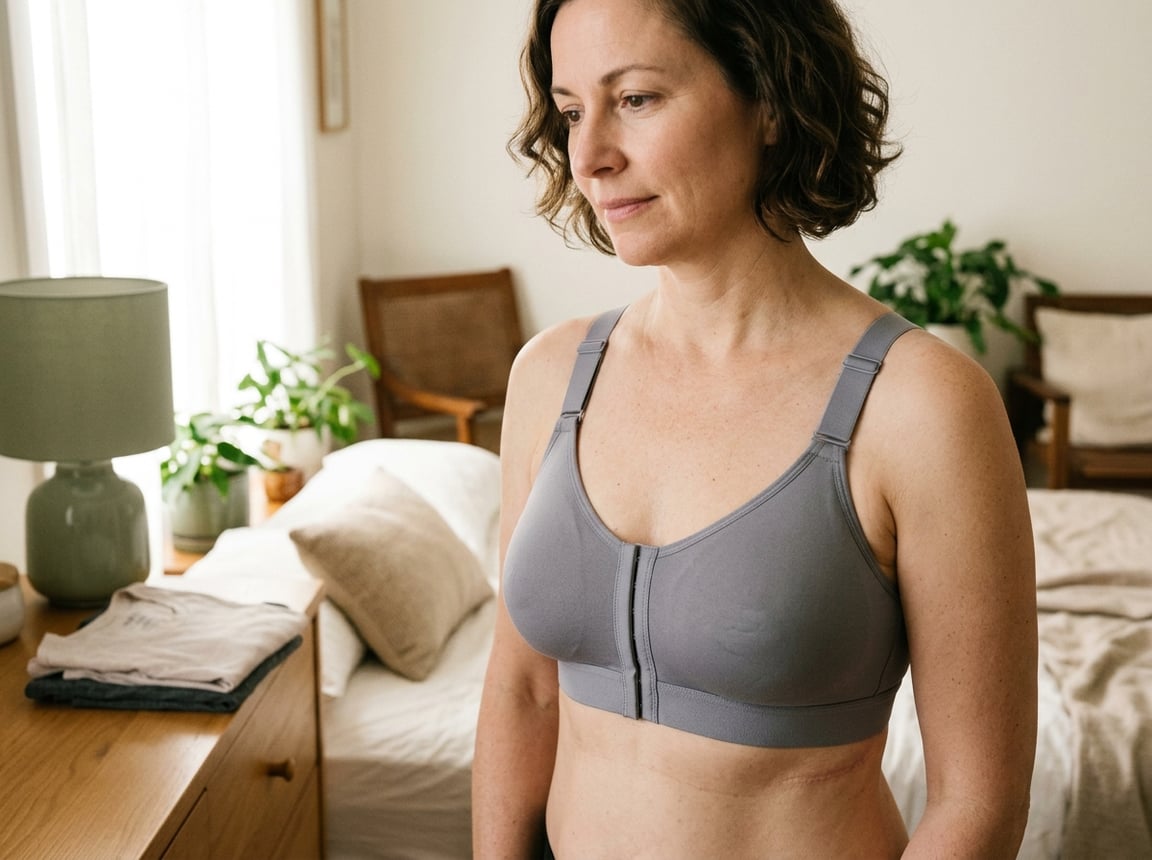
This kind of flap reconstruction asks more of your body than a mastectomy alone, especially after a double mastectomy with abdominal tissue transfer. Getting the bra and binder to cooperate, instead of rolling into each other, makes those first weeks far more manageable.
What to Wear in the First Stage of Recovery
The best early-recovery bra is a soft, front closure bra with no underwire, wide straps, and a band positioned to avoid your abdominal incision. This setup solves several problems at once: limited arm mobility, drain access, and sensitive skin around fresh incisions.
Why a Front Closure Is Usually Easier Than a Pullover Bra
Reaching overhead or behind your back is hard to do safely in the first days after flap surgery. A front closure bra lets you step into it and fasten it at chest height, without stretching your arms or twisting your torso. This is one reason surgical teams frequently recommend transitioning patients toward front-closure sports bras once drains come out, since the closure style carries over from the immediate post-op period into early activity.
Choosing Gentle Support Around Drains and Sensitive Areas
Drains usually exit near the chest or underarm area, so a post-surgical bra needs room for tubing without pressure on the tube itself. Look for a soft bra with a wide, flexible band and no seams pressing directly over drain sites. Some recovery bras include small openings or loops built for this exact purpose, which is worth asking your surgical team or nurse about before you buy anything.
Why Regular Bras Often Feel Wrong Right After Flap Surgery
A standard underwire bra puts pressure exactly where flap tissue and incisions are healing, which is uncomfortable at best. Underwire can also dig into swollen or numb skin without you noticing right away, since sensation in reconstructed tissue is often reduced early on. Compression bra styles designed for post-surgery support are built specifically to avoid that problem while still holding dressings gently in place.
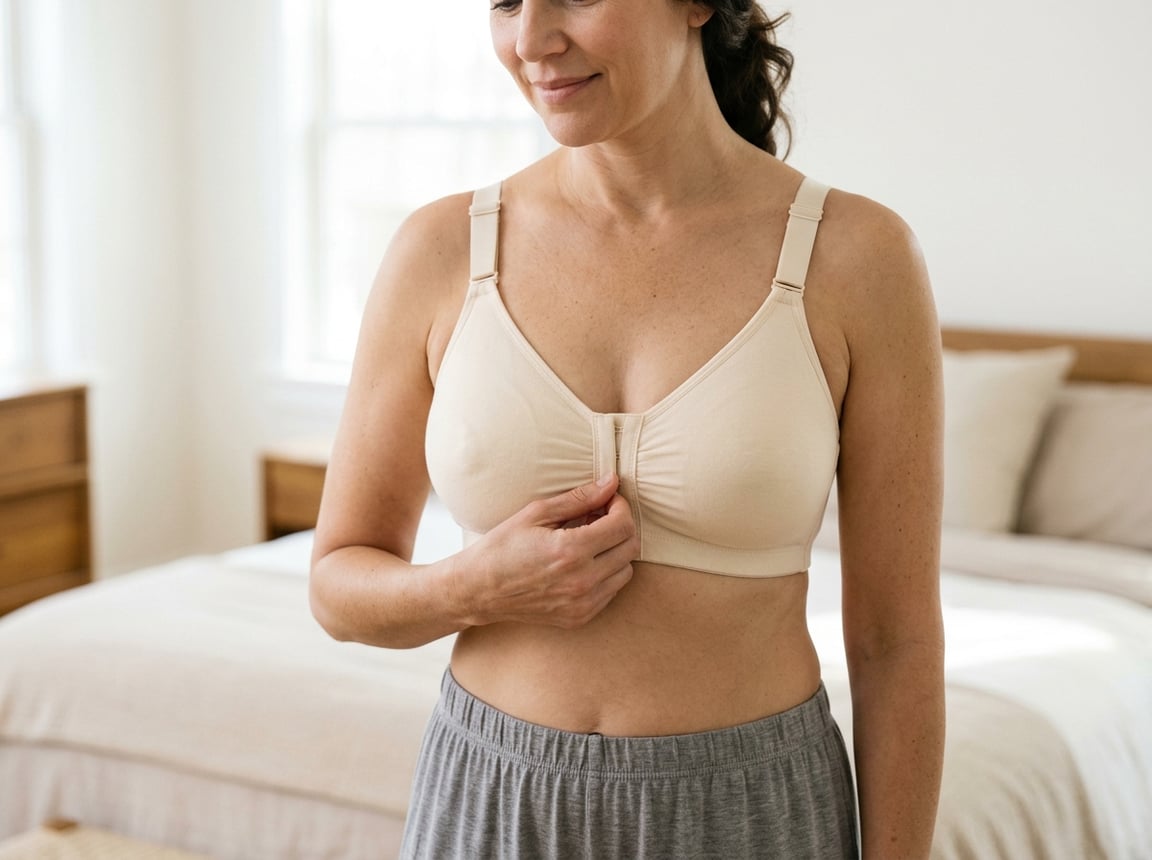
How Bra Needs Typically Change as You Heal
Bra needs shift in stages as swelling goes down, drains come out, and your surgeon clears more movement. The first two weeks call for the simplest, gentlest option; the following weeks bring more flexibility; and full clearance opens the door to everyday and activewear bras.
The Typical First Two Weeks: Easy Access and Light, Steady Support
In this window, most women wear the same soft, front closure surgical bra day and night. It's not about shaping anything yet; it's about steady, light support and easy access for checking incisions or managing drains. A post-mastectomy bra built with wide straps and a soft band works well here even for flap patients, since the front-opening design and lack of underwire matter more than any mastectomy-specific feature.
Early Recovery: More Adjustability as Swelling and Mobility Change
As swelling shifts and drains come out, your body may not fit the same bra the same way it did in week one. Fluid changes can alter your band size over the first several weeks. Adjustable straps and a flexible band become useful here, letting you fine-tune fit without buying a new size.
Soft bras with stretch panels or multiple hook rows tend to accommodate these changes better than a fixed-size compression bra.
After Surgeon Clearance: Moving Toward Everyday Bras and Activity
Once your surgeon clears more activity, usually past the six-week mark, a supportive bra or sports bra can start replacing the recovery bra. Many women eventually transition to a gentle support bra or a stretchy bralette for daytime comfort.
If you're curious about transitioning from a surgical bra to regular bras, that process is usually gradual rather than a single switch.
How to Prevent Bra Bands from Fighting Your Abdominal Binder
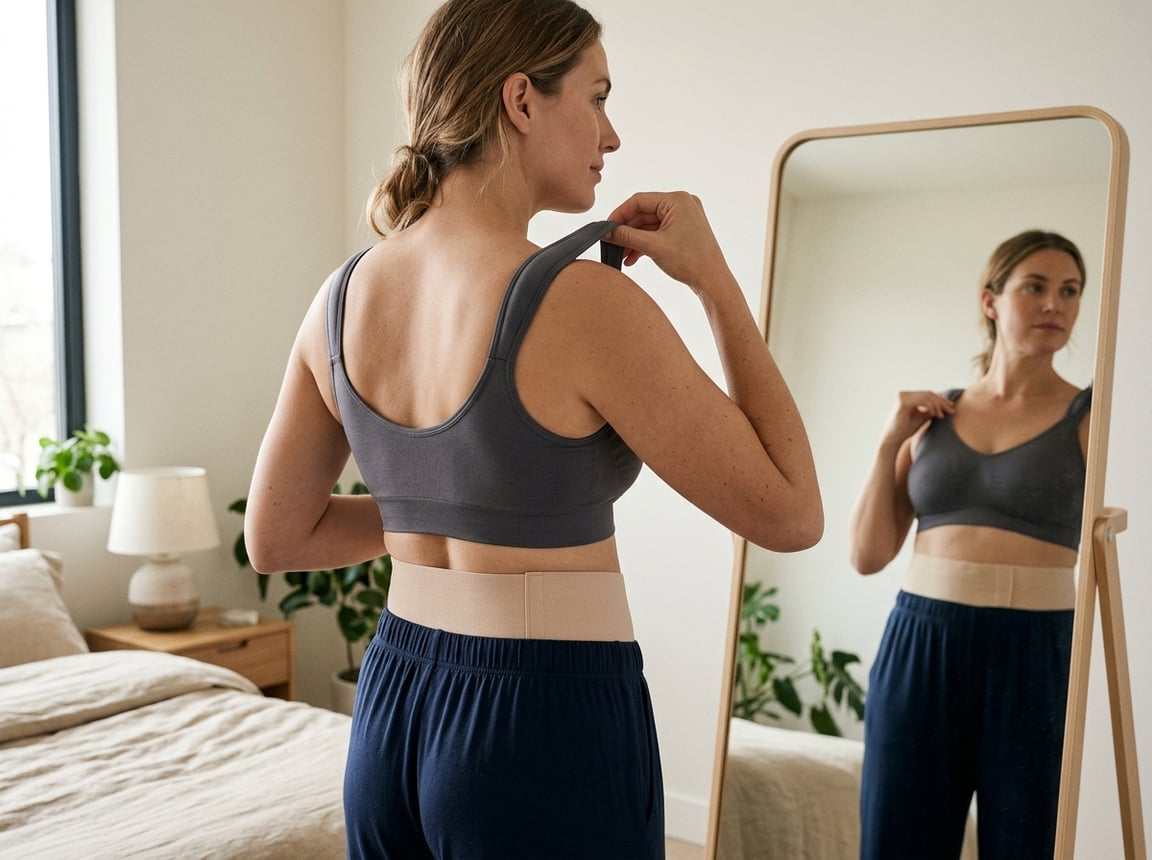
The bra band and abdominal binder need separate space, or you'll spend your recovery adjusting both all day. This overlap problem is specific to flap surgery, since mastectomy-only patients don't have a binder to work around. Getting the layering right early saves a lot of discomfort later.
Finding a Band Position That Does Not Roll, Rub, or Bunch
Your bra band should sit above where the binder begins, without a gap that lets fabric roll or bunch between the two garments. According to guidance on post-surgical garments after breast reconstruction, many surgical teams provide specific instructions on how these garments should layer, since a binder is often easier to fit around drains and adjust as swelling decreases in the earliest days. If your bra keeps sliding down into the binder, a wider or higher-sitting band style may solve it.
When a Longer-Line Style May Feel More Secure
A longer-line bra, one that extends a bit further down the torso, can sometimes stay put better than a short-band style, since it has more surface area to distribute against. This can be worth trying if a regular-length band keeps rolling no matter how you adjust it. Not every longer-line style plays well with a binder underneath, so check the fit while both garments are on, not separately.
Questions to Ask Your Surgical Team Before Changing Support Garments
Before swapping bra styles or band positions, ask your team directly: Does the abdominal binder need to stay under the bra band, or on top of it? How many hours a day should the binder stay on? Is any pressure on the DIEP flap or TRAM flap donor site a concern with this particular bra? Your surgical team knows your specific incision placement and healing progress, which matters more than any general rule.
Features That Make a Recovery Bra More Comfortable
The most comfortable recovery bras share a handful of physical traits: no underwire, wide adjustable straps, soft low-irritation fabric, and flexible closures that can change with your body. Finding a truly comfortable bra eases daily life during recovery.
Wire-Free Cups, Soft Fabrics, and Low-Irritation Seams
Wire-free molded cups hold shape without pressing into tender or numb tissue, which matters since sensation in reconstructed breast tissue often takes time to return. Soft, breathable fabric with flat or bonded seams reduces rubbing against incisions and skin that may still be sensitive months out. A soft bra made from cotton-blend or modal fabric tends to feel gentler than synthetic compression material worn directly against healing skin.
Adjustable Straps and Flexible Closures for a Changing Fit
Adjustable straps let you loosen or tighten support as swelling changes week to week, without needing a new bra size every time your body shifts. Multiple rows of hooks on a front closure give the same flexibility for the band. This adjustability stretches the useful life of one bra across several stages of recovery instead of just one.
When Molded Cups, Pockets, or Removable Pads May Help
Molded cups can offer light shaping without underwire, which some women prefer even before full reconstruction results settle. Interior pockets designed for breast forms or breast prostheses are common after a lumpectomy or mastectomy, while removable pads in a post-mastectomy bra help balance asymmetry during healing.
Ask a fitter which features actually apply to your specific reconstruction timeline before paying for extras you won't use.
Choosing Support That Lets Recovery Feel More Manageable
Recovery after DIEP flap or TRAM flap surgery involves healing in two places at once, and the right bra takes pressure off both instead of adding to the load. A soft, front closure, wire-free bra with a band clear of your abdominal binder covers most of what the first week's demand. As drains come out and swelling settles, that same bra can flex with adjustable straps before you eventually move toward every day or sports bra options.
Flap reconstruction is not the same recovery as a lumpectomy or implant reconstruction, and it's worth treating it that way when you shop for support garments. If your procedure involves implants instead of your own tissue, a breast augmentation-focused guide will fit your recovery better than flap-specific advice. Whatever the surgery, checking in with your surgical team before switching bra styles keeps your choices aligned with how your body is actually healing.
Frequently Asked Questions
What type of bra is best immediately after DIEP flap surgery?
A soft, front-closure, wire-free bra with wide straps and a band positioned away from the abdominal incision is generally the most comfortable option right after DIEP flap surgery. It allows easy one-handed dressing and avoids pressure on tender chest and abdominal tissue. Your surgical team may provide a specific recommendation based on your incision placement, so confirm before purchasing.
Can I wear a pullover bra after TRAM flap reconstruction?
Pullover bras are usually difficult and uncomfortable in the early weeks after TRAM flap surgery, since raising your arms overhead can strain both the chest and abdominal incision sites. Front-closure styles avoid that movement entirely. Most surgical teams recommend waiting until arm mobility and abdominal healing have progressed before switching to a pullover style.
Should my bra band sit over or under my abdominal binder?
This depends on your surgeon's specific instructions, since binder and bra layering varies by surgical practice. Many recovery guides note that binders are often positioned to be adjusted independently of the bra, particularly while drains are still in place. Ask your surgical team directly which layering order they recommend for your incisions.
When can I start wearing a sports bra after DIEP or TRAM surgery?
Many women transition to a front-closure sports bra once their surgeon clears more activity and drains have been removed, though the exact timing depends on individual healing. Some surgeons recommend sports bras specifically because their structure resembles the surgical bras used right after the procedure. Confirm timing with your surgical team rather than following a fixed calendar.
Do I need a compression bra after flap reconstruction?
Some surgical teams recommend a compression bra to support healing tissue and manage swelling, particularly in combination with an abdominal binder for the donor site. Others prefer a softer, non-compressive front-closure bra depending on the specifics of the reconstruction. Your surgeon's post-op instructions should guide which type is appropriate for your recovery.
How should a post-surgery bra fit if I still have drains?
A well-fitting post-surgery bra with drains in place should have enough room in the band and cups to avoid pressing on drain tubing, with any drain-access openings positioned away from incision lines. It shouldn't feel tight enough to disturb the tubing when you move. Ask your care team for specific drain-management guidance, since the right approach depends on where your drains are placed.
Conclusion
Healing from DIEP or TRAM flap surgery requires patience and garments that adapt to your body. Prioritizing soft fabrics, front closures, and wire-free support protects sensitive incisions while keeping you comfortable.
Always follow your surgical team's guidance as your swelling decreases and mobility improves. With the right post-operative garments, you can focus fully on your recovery.
0 comments