

Most people return to light daily activities within 1 to 2 weeks of breast explant surgery and feel largely recovered in about 2 to 6 weeks. You will usually wear a supportive or compression bra for 4 to 6 weeks, then switch to a soft, wire-free, front-closure bra once your surgeon clears you. Your breast shape can keep changing for several months.

This guide walks you through each stage of breast implant removal recovery. It covers what to expect, how your procedure affects healing, which side effects need attention and how to choose a bra that fits your changing shape.
Key takeaways
- Basic recovery from explant surgery usually takes about 2 to 6 weeks.
- Expect to wear a supportive bra for 4 to 6 weeks, or as long as your surgeon advises.
- Capsule removal, a breast lift or fat transfer can lengthen your recovery.
- Your breast shape may keep settling for several months as swelling fades.
- Switch to a soft, front-closure bra only after your surgeon clears you.
What Is Breast Explant Surgery?
If you are asking “what is explant surgery?”, it is an operation to permanently remove breast implants. Your surgeon may also remove some or all of the capsule, the layer of scar tissue your body formed around each implant.
According to Living Beyond Breast Cancer, common reasons for explant surgery include:
- Capsular contracture: The capsule hardens, causing pain or distortion.
- Rupture or leaking: The implant shell weakens or is damaged.
- Shifting implants: The breasts start to look uneven.
- Pain or limited movement: You feel tightness in the chest, shoulder or back.
- Breast implant illness (BII): You have symptoms such as fatigue, brain fog or joint pain that some people link to their implants.
- Personal preference: You simply no longer want implants.
Explant surgery is usually done under general anesthesia. If you had implant reconstruction after mastectomy, your surgeon may combine it with aesthetic flat closure or tissue (flap) reconstruction. Our guide to choosing between reconstruction, a prosthesis, or going flat can help you think through those options.
Types of Capsule Removal
How much capsule your surgeon removes affects your surgery and recovery:
| Approach | What is removed | Often used when |
|---|---|---|
| En bloc capsulectomy | Implant and capsule together, in one piece | Infection is suspected, BII symptoms are present, or BIA-ALCL is diagnosed |
| Total capsulectomy | Implant first, then the entire capsule in pieces | Removal is for pain, discomfort or shifting |
| Partial capsulectomy | Implant and most of the capsule | The capsule is healthy, or stuck firmly to the chest wall |
En bloc capsulectomy is not needed for every explant. Ask your surgeon which approach they recommend for you and why.
Breast Explant Surgery Recovery Timeline

Every recovery is different, but most follow a similar pattern. Treat these timeframes as a guide, and let your surgeon approve each change in activity and support.
| Stage | What to expect | What to wear |
|---|---|---|
| First few days | Soreness, swelling, bruising and tiredness | The surgical or compression bra your surgeon prescribes |
| Weeks 1–2 | Follow-up visits, possible drain removal, return to desk work | Prescribed support, plus loose, front-opening tops |
| Weeks 3–6 | Easier movement and gradual return to exercise | A soft, front-closure bra once you are cleared |
| 6 weeks and beyond | Shape, sensation and scars continue to settle | Everyday bras fitted to your new measurements |
The First Few Days: Rest and Prescribed Support
You will likely feel sore and tired, with swelling or bruising around your chest. Arrange help with lifting and household tasks, take medication as directed and follow your dressing instructions.
Wear the support your surgeon prescribes. If you have drains, record the output and secure the tubing as instructed. Short, approved walks help circulation, and soft post-surgery loungewear makes moving around easier.
Weeks 1–2: Follow-Up Visits and Gentle Activity
Your team will check your incisions and swelling at follow-up visits. Plastic surgeons at Ohio State Wexner Medical Center typically see explant patients at 1, 3, 6 and 12 weeks after surgery. They also note that most people wear a supportive bra for 4 to 6 weeks.
Drains come out when your drainage drops enough, so keep recording output until you are told to stop. Many people feel ready for desk work within 1 to 2 weeks. Keep lifting restrictions in place, and do not drive until you are off sedating medication and can steer and react safely.
Weeks 3–6: Gradual Progress and Bra Transitions
Everyday movement usually feels easier now, even with some tenderness. Exercise clearance often comes at around 4 to 6 weeks, and later after more involved surgery.
Ask your surgeon specifically about transitioning from a surgical bra to regular bras. Get separate guidance for daytime, sleep and exercise before changing your routine.
Beyond Six Weeks: Shape, Sensation and Scars
Your breast shape can keep settling for several months as swelling fades. Your skin elasticity and the amount of natural breast tissue you have both affect the final look.
Mention any lasting changes in sensation at your follow-up visits. Start scar massage or silicone treatment only once your team confirms your incisions are ready.
How Your Procedure Affects Breast Implant Removal Recovery
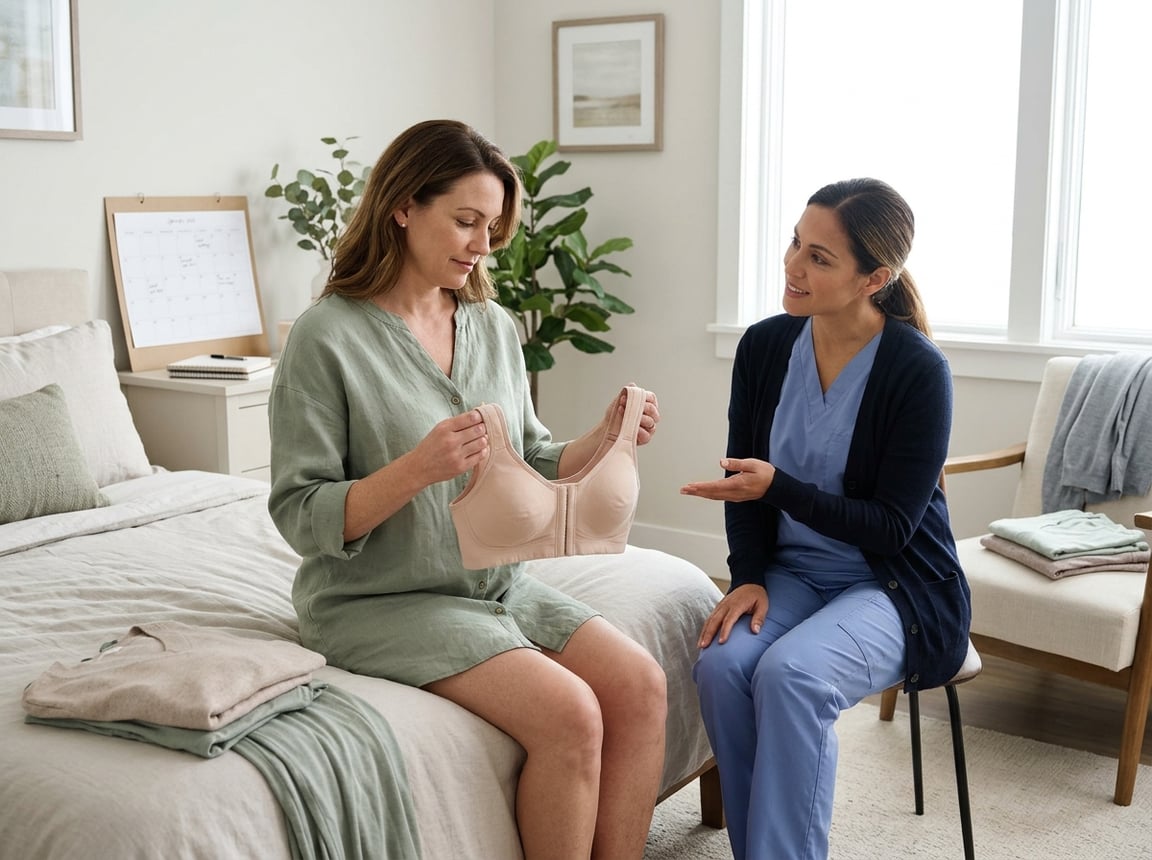
Your recovery depends on how much work your surgeon does. Capsule removal, a lift or fat transfer each add healing time and care needs beyond implant removal alone.
Capsulectomy and Capsular Contracture
With capsular contracture, the scar tissue around your implant has tightened, causing firmness, distortion or pain. Removing that tissue adds surgical work and may change your drain care or activity limits.
If You Had Explant Surgery for Breast Implant Illness
If you had surgery for symptoms linked to breast implant illness, track those symptoms separately from your incision healing. Living Beyond Breast Cancer notes that in small studies, 70% to 96% of people with BII reported feeling better after their implants and capsules were removed. There is no guaranteed timeline, though. Get a medical review for any symptoms that persist.
Breast Explant and Lift vs. No Lift
After breast implant removal with no lift, your final shape depends on how your remaining tissue and skin respond. Some people feel flat after breast implant removal, especially if their implants were large or their skin has lost elasticity.
A breast explant and lift adds incisions to reshape the breast, so you will have extra areas to protect. Follow your surgeon’s instructions for each incision.
Adding Fat Transfer
Fat transfer uses fat taken by liposuction from another area of your body to add volume. You will have donor sites to care for as well as your chest. Ask where compression is needed and where to avoid pressure, since each area may need a different garment.
What Bra Should You Wear After Explant Surgery?

Start with the surgical support your surgeon prescribes. Move to a softer everyday bra only once you are cleared. Browse Meadow’s post-surgery bras for styles designed for this transition. Meadow bras offer gentle support, but they are not medical-grade compression garments.
When Do You Need a Compression Bra?
Wear a compression bra if your surgical team includes one in your recovery plan. Ask how snug it should feel, how many hours a day to wear it, whether to wear it overnight and when you can take it off to wash it.
For more on how compression differs from gentle support, read our guide to compression garments after surgery and our overview of types of post-surgery bras.
What Makes a Good Transitional Bra?
Once you are cleared, look for these features:
- Wire-free construction: Nothing presses into tender tissue or scars.
- A front closure: You can dress without reaching behind your back.
- Soft, breathable fabric: It is gentle on sensitive skin.
- Adjustable straps: You can fine-tune the fit as swelling changes.
- A wide band placed away from incisions: This matters most if your scars sit along the breast crease.
- Removable pads: You can add or remove coverage as your shape settles.
Our guide to choosing a post-surgery bra explains each feature in more detail.
Wilderness Front-Closure Cotton Bralette: Best for Gentle Everyday Wear
The Wilderness Front-Closure Cotton Bralette is our softest style, made for cleared recovery days and lounging.
- Breathable cotton-modal fabric that feels like a second skin
- Front zipper for easy on and off
- Light, wire-free support
- Built-in pockets and lightweight removable pads
- Wide band that sits away from sensitive areas
- Cami-style back with adjustable straps
Fit tip: Wilderness fits true to size. If you are still swollen, you may prefer to size up.
Hero Front-Closure Sports Bra: Best for Cleared Light Activity
The Hero Front-Closure Sports Bra works well once you are cleared for gentle exercise.
- Front zipper for quick, gentle dressing
- Soft cotton lining for sensitive skin
- Supportive racerback
- Wide waistband designed to avoid incision sites
- Pockets and removable lightweight pads
Start with the activity level your surgeon approves, and check for rubbing after each workout.
| Bra | Closure | Fabric | Best for |
|---|---|---|---|
| Wilderness Front-Closure Cotton Bralette | Front zip | Cotton-modal | Gentle everyday wear and lounging |
| Hero Front-Closure Sports Bra | Front zip | Cotton-lined | Cleared light activity |
Finding Your Fit as Your Shape Changes
Your pre-surgery bra size will not tell you much after explant surgery. Your cup volume changes, and swelling around your torso can affect your band size for weeks. Learn more about how bra size changes after surgery.
When Should You Remeasure?
Take new measurements when your surgeon clears you for a transitional bra. Measure again if your band rides up or your cups start to gape. Buy only one or two bras at first, then reassess before replacing your whole drawer.
Use the Meadow bra fit guide with the size chart for your chosen style. Some styles use band-and-cup sizes and others use clothing sizes, so check before ordering.
Feeling Flat After Breast Implant Removal
Feeling flat after breast implant removal is common, especially right after surgery. You can wear Wilderness or Hero with or without their removable pads, depending on how much coverage you want. If you prefer a smooth, flat look, browse our flat-friendly bras.
If you plan to wear breast forms, follow our guide to measuring for a pocketed bra with your forms in place, once your team approves them.
Breast Implant Removal Side Effects: What Is Normal?
When you check for side effects after breast implant removal, focus on whether symptoms are easing or getting worse.
Common, Expected Symptoms
- Bruising and swelling
- Tightness or soreness across the chest
- Tiredness
- Temporary numbness or changes in sensation
Call Your Surgical Team Promptly If You Notice
- Increasing redness or warmth
- Fever
- Foul-smelling drainage or an incision that opens
- Pain that gets worse instead of better
- Rapid swelling on one side
When Your Bra Is Causing Problems
Contact your team if your bra leaves lasting pressure marks, rubs an incision, causes numbness or increases your pain. Check the band, zipper, straps and seams. If prescribed support irritates your skin, ask before changing garments or adding padding. Follow the care label and our tips for surgical bra care to keep your garments clean.
When to Seek Urgent Care
Call 911 for sudden shortness of breath, chest pain, fainting or coughing up blood. Seek urgent care for uncontrolled bleeding, a breast that quickly becomes swollen and painful, or new calf pain or one-sided leg swelling.
Frequently Asked Questions
How long is recovery after breast explant surgery?
Most people return to light activity within 1 to 2 weeks and feel largely recovered in about 2 to 6 weeks. Your breast shape can keep settling for several months, and recovery takes longer after a capsulectomy, lift or fat transfer.
How long do you wear a compression bra after explant surgery?
Most surgeons recommend a supportive or compression bra for about 4 to 6 weeks. Follow your own surgeon’s instructions, including whether to wear it overnight.
What are the best bras to wear after explant surgery?
Wear your prescribed surgical bra first. Once you are cleared, choose a soft, wire-free, front-closure bra, such as the Wilderness Front-Closure Cotton Bralette for everyday wear or the Hero Front-Closure Sports Bra for light activity.
Can I sleep without a bra six weeks after explant surgery and a breast lift?
Only once your surgeon clears you to stop overnight support. A lift adds incisions, so ask at your six-week visit whether you still need a bra at night.
Can I go braless if I am flat after breast implant removal?
Yes, once your surgeon says you can stop wearing required support. Ask whether that clearance covers sleeping and exercise as well as daytime wear.
Are the best bras after breast augmentation also suitable after explant surgery?
Some features overlap, such as front closures and soft fabric. Augmentation advice is designed to support implant position, though, so check our list of best bras after breast augmentation against your explant instructions.
Conclusion: Supporting Your Body After Breast Explant Surgery
Recovery from breast explant surgery takes patience. Your body heals in stages, and your shape keeps changing for months. Wear your prescribed support for as long as your surgeon recommends, then let comfort and your current measurements guide each new bra.
When you are cleared for softer support, the Wilderness Front-Closure Cotton Bralette offers gentle everyday comfort, and the Hero Front-Closure Sports Bra is ready for light activity. Both zip at the front, so getting dressed stays easy while you heal.
This article is for general information and does not replace advice from your surgeon or care team.
0 comments