

Yes, your bra size can change after a mastectomy or reconstruction, and this is a common part of healing. Swelling, scar tissue, asymmetry between sides, and the shape difference between natural tissue and an implant or flap all play a role. It's normal to need a different band and cup size than before surgery, sometimes for months while your body continues to settle.
If you've pulled out an old bra and found it suddenly gaping, digging in, or sitting wrong, you're not imagining it and nothing has gone wrong. Your chest is healing and changing shape, and your bra needs are changing right along with it.
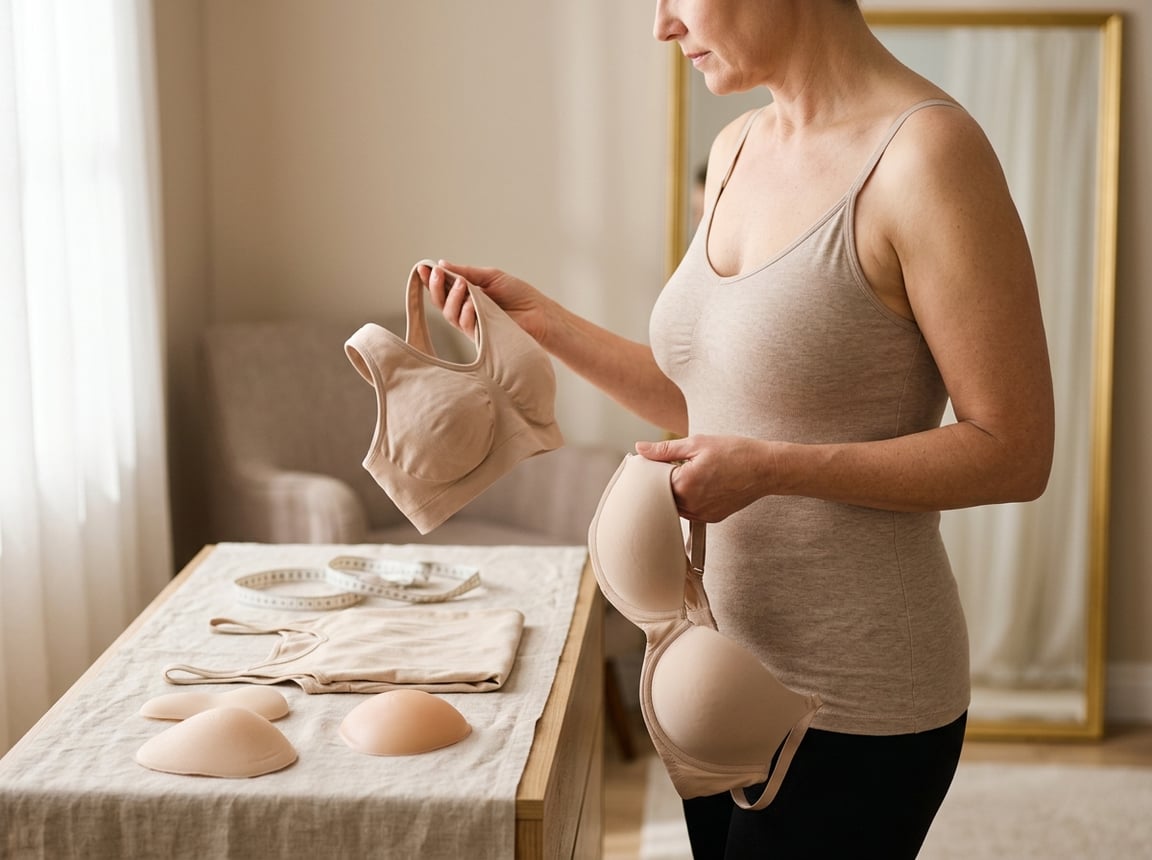
This guide walks through why sizing shifts happen, what timeline to expect, and how to get measured and fitted with confidence at each stage of recovery.
Key Takeaways
- Bra size changes after mastectomy or reconstruction are expected, not a sign that something is wrong.
- Swelling and scar tissue can take months to fully settle, so early sizing is temporary.
- A professional fitting, timed to your healing stage, gives more reliable results than reusing an old chart.
Why Your Previous Bra Size May No Longer Apply
Your pre-surgery bra size was based on tissue, shape, and symmetry that no longer describe your chest the same way. Surgery changes cup volume, the way your band sits, and how evenly weight is distributed across both sides, so a size that fit for years can stop working within weeks.
How Band Size vs. Cup Size Can Change
Band size and cup size shift for different reasons, and it helps to think of them separately. Your band size reflects your ribcage measurement, which can change with weight fluctuation from treatment, reduced activity, or steroid medications. Your cup size reflects breast volume and shape, which shifts more directly from tissue removal, implant placement, or swelling.
How Swelling and Scar Tissue Affect Fit
Swelling is one of the biggest reasons early post-op sizing feels unreliable. Scar tissue can also keep maturing and softening for up to a year, gradually changing the shape and firmness of the area a bra needs to support. This is why fitters generally recommend waiting for swelling to settle before treating any single measurement as final, as described in guidance on bra sizing after breast surgery.
How Surgery Type Changes the Sizing Picture
Unilateral surgery (one side) often creates a visible difference between the treated and untreated breast, while bilateral surgery (both sides) tends to preserve more symmetry even as total volume changes. A comparison of bilateral and unilateral mastectomy explains how this affects bra needs and whether breast forms are used at all. Lumpectomy patients usually see smaller shifts, but resizing bra after lumpectomy is still common if swelling or a size difference between breasts develops.
When to Expect Size Changes During Healing
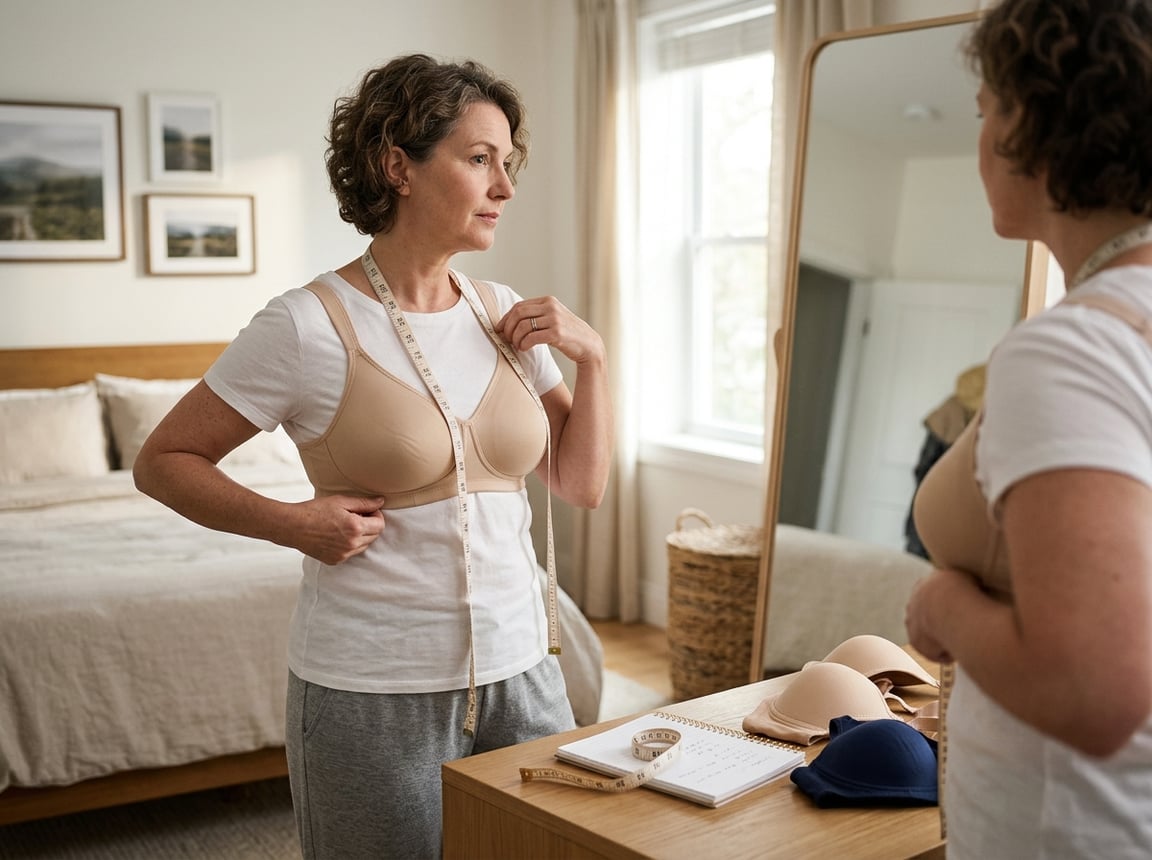
Size changes tend to follow a rough pattern: rapid shifts in the first weeks from swelling, more gradual shifts over months as tissue and scars settle, and a "final" size that often isn't accurate until 6 to 12 months after surgery. Reconstruction with tissue expanders adds another layer, since the shape and volume are deliberately changed in stages.
The Early Recovery Period
The first few weeks call for soft, wire-free bras rather than any true sizing effort. Post-op fluctuation from swelling and drains is expected, and clothes should prioritize comfort and healing over an exact fit. Many surgical teams recommend a front-closure, wire-free bra for this stage, as outlined in breast reconstruction guidance from the National Cancer Institute.
Changes During Tissue Expansion and Implant Placement
Tissue expansion changes your shape gradually and on purpose. Expanders are filled in stages to stretch skin before a permanent implant is placed, so bra size after implant reconstruction can shift every few weeks during this phase. A clinical review of implant-based reconstruction and bra fit found measurable changes to the anatomical points bras are built around, both for one-sided and two-sided reconstruction.
When to Get Refitted After Breast Surgery
Most fitting guides suggest waiting about six weeks after mastectomy for initial swelling to go down before a fitting, and longer after reconstruction, according to fitting timelines from Nicola Jane. Reconstruction bras and other support styles may still need adjusting after that first fitting as expansion or healing continues. Your surgical team's specific timeline always takes priority over a general guideline.
How to Measure for a Comfortable, Supportive Fit
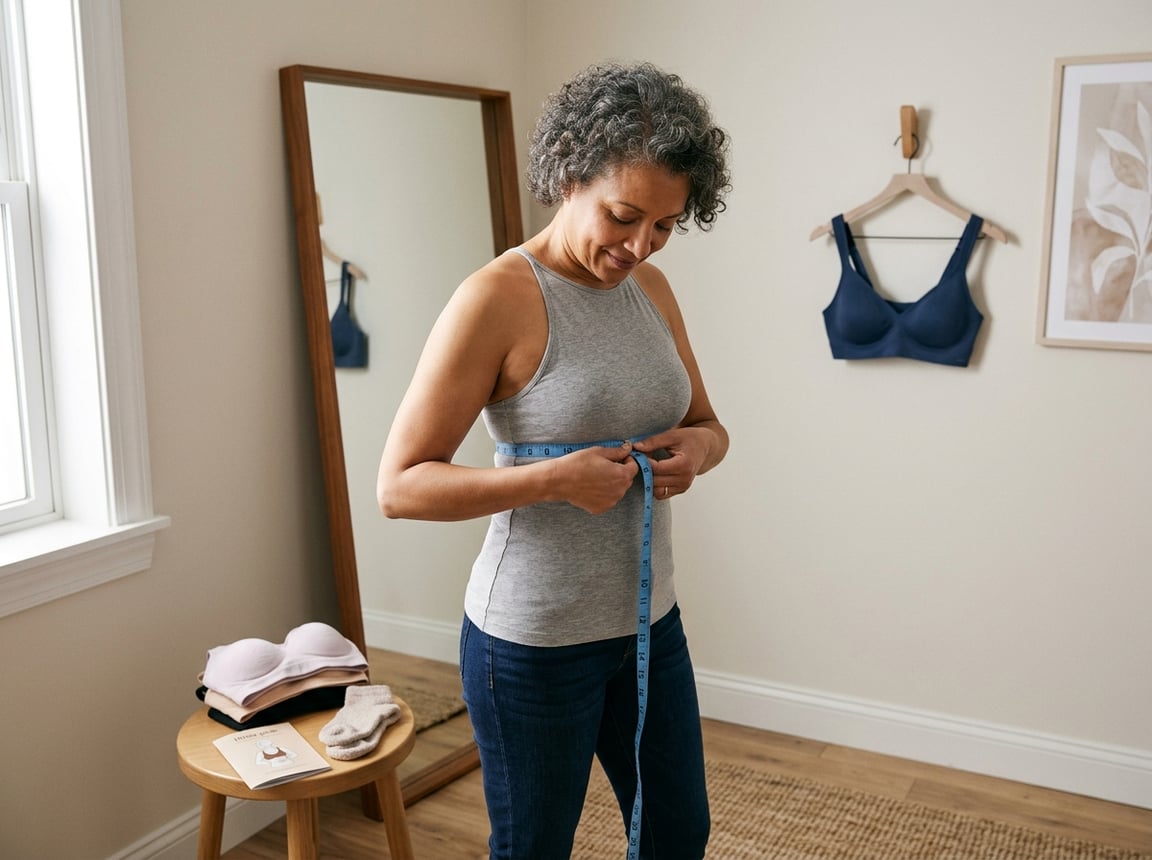
Measuring after breast surgery follows the same basic steps as before surgery, but the results are read differently because scars, asymmetry, and prosthesis weight change how a tape measure translates into a comfortable size. Getting familiar with band, cup, strap, and prosthesis fit gives you a working starting point before any professional appointment.
How to Measure Yourself for a Mastectomy Bra
Measure your band by wrapping a soft tape around your ribcage, directly under where the bra band sits, keeping the tape level and snug but not tight. For cup measurement, wrap the tape around the fullest part of your chest, following the step-by-step approach outlined by Meadow. If one side has less tissue than the other, measure both sides and use the larger number as your baseline, since a bra sized to the smaller side will feel tight where you need room.
How to Check Band, Cup, and Strap Fit
A good band stays level all the way around and doesn't ride up your back. Cups should hold breast tissue or a breast form without gaping or spilling over the top, and straps should sit flat against your shoulders without digging in or slipping. If your band size doesn't come in the cup size you need, sister sizing (moving a cup size up while going down a band size, or the reverse) can help you find a comparable fit.
How to Fit a Prosthesis or Breast Form
Prosthesis weight and fit change how a bra sits differently than natural tissue does, since a breast form doesn't compress or shift the same way. Pocketed bras for breast forms are built with a fabric pocket that holds the form securely in place, and getting the pocket depth and position right matters as much as getting the cup size right.
When a Professional Bra Fitting Helps
A professional bra fitting is worth scheduling because DIY charts are less reliable after surgery than before it, when scars, swelling, and asymmetry all affect the numbers a chart assumes are symmetrical. Fitters trained in post-surgical bras can also check pocket placement for breast forms and adjust for prosthesis weight, something a self-measurement can't fully replicate.
Choosing Bras for Asymmetry, Reconstruction, and Everyday Wear
Bra choice after surgery depends on whether you're managing a size difference between breasts, adjusting to a reconstructed shape, or transitioning back to daily wear. The right bra for each stage looks different, and there's no single "correct" choice among reconstruction, a breast form, or going flat.
Managing One-Sided Volume Differences
Breast asymmetry after unilateral surgery is common and can be managed with pocketed inserts, symmetrical shaping panels, or simply a bra style cut generously enough to fit the fuller side. An asymmetry after breast surgery bra doesn't need to hide the difference; it needs to distribute weight evenly and sit level across the chest. Meadow's guide to top features for post-surgery bras covers construction details worth checking, like wider bands and adjustable straps on each side independently.
Mastectomy Bras vs. Regular Bras
Mastectomy bras are built with features regular bras don't include: pockets for breast forms, wider and softer bands, higher underarm and center-front coverage, and seam placement designed to avoid pressure on healing scars. You can wear a regular bra after a mastectomy once your surgeon confirms healing is far enough along, but many people find mastectomy-specific construction more comfortable through the first several months. A closer look at mastectomy bras compared with regular bras breaks down these construction differences in more detail.
How to Adjust Your Mastectomy Bra as You Heal
Bras bought early in recovery may need retightened bands, moved straps, or repositioned pockets as swelling goes down and shape settles. Rather than replacing a bra every time fit shifts slightly, many adjustable styles can be resized at the band and strap for a few months of use. Step-by-step tips for adjusting a mastectomy bra cover how to make small changes at home between fittings. Once your shape has settled, transitioning toward everyday bras becomes a reasonable next step for many people.
A Comfortable Fit Can Evolve With Healing
Bra fit after reconstruction or mastectomy is rarely a one-time decision. Swelling changes week to week early on, scar tissue keeps softening for months, and your shape may keep shifting through tissue expansion or later stages of healing. Knowing when to get refitted after breast surgery, whether that's six weeks out or closer to a year, helps you avoid wearing a bra that no longer matches your body.
Watching for signs like gaping cups, a band that rides up, or straps that dig in gives you a practical signal that it's time for a new fitting rather than a new size guess. Once things settle, many people move comfortably into everyday bras with the same attention to band, cup, and strap fit used throughout recovery.
Frequently Asked Questions
Will my band size change after a mastectomy?
Band size can change after a mastectomy, often due to swelling, weight fluctuation from treatment, or changes in posture during healing. It's common for the band that fit before surgery to feel loose or tight afterward and rechecking it once swelling settles gives a more accurate number.
How soon after mastectomy can I be fitted for a bra?
Many fitting guides suggest waiting about six weeks after mastectomy, once initial swelling has gone down, though your surgical team's specific timeline should guide this decision. Fittings after reconstruction often happen later, since tissue expansion or additional healing can keep changing your shape.
What bra size should I wear after implant reconstruction?
There's no single size to expect after implant reconstruction, since results depend on implant size, healing progress, and whether reconstruction is one-sided or two-sided. Bra size after implant reconstruction often continues shifting during tissue expansion, so a fitting is most reliable once your surgeon confirms your implant placement is final.
Can I wear a regular bra after a mastectomy?
You can wear a regular bra after a mastectomy once your surgeon confirms your incisions and scars have healed enough for standard seams and underwire. Many people continue choosing mastectomy-specific bras for the softer bands, pocket options, and scar-friendly seam placement even after this point.
How do I choose a bra if one breast is larger after surgery?
Choosing a bra with a size difference between breasts often means fitting the band to your ribcage and the cup to your fuller side, then using a pocketed insert or padding on the smaller side to balance appearance. A professional bra fitting familiar with post-surgical asymmetry can help you find a style built to accommodate this comfortably.
Conclusion
If your bra size has changed after a mastectomy or reconstruction, you're not imagining it, and you're not alone. Swelling, scar tissue, asymmetry, and the natural differences between reconstructed and natural tissue can all shift your fit, sometimes for up to a year after surgery.
What matters most isn't matching your pre-surgery size but paying attention to how your bra actually feels day to day: no gaping, no digging straps, no band that rides up. When something feels consistently off, a professional refitting, not a size chart, is the most reliable way to find your new normal.
Meadow's mastectomy and reconstruction bras are built to adjust with you through every stage of this process, from pocketed styles for prosthesis to everyday bras for once you've settled into your new fit. Explore our collection to find support that moves with your body; however it continues to change.
0 comments