
Mastectomy scar care typically begins once the incision is fully healed with no scabs or open areas, on your surgical team's confirmation. It usually involves gentle massage with a fragrance-free moisturizer or silicone product, plus sun protection. Avoid massaging broken, inflamed or radiation-affected skin, and check with your team before starting.

You can support softer, more comfortable scars by following your surgical team’s guidance on massage, moisturizing, silicone care, and sun protection. Your scar may look red, raised, tight, or uneven at first and can change for 12 to 18 months. Your care plan may also differ after reconstruction, radiation, or other treatments.
You will learn when to begin massage, which products may help, and what to avoid during recovery. You will also find practical tips for clothing, comfort, activity, and common questions about healing.
How Surgical Scars Heal Over Time
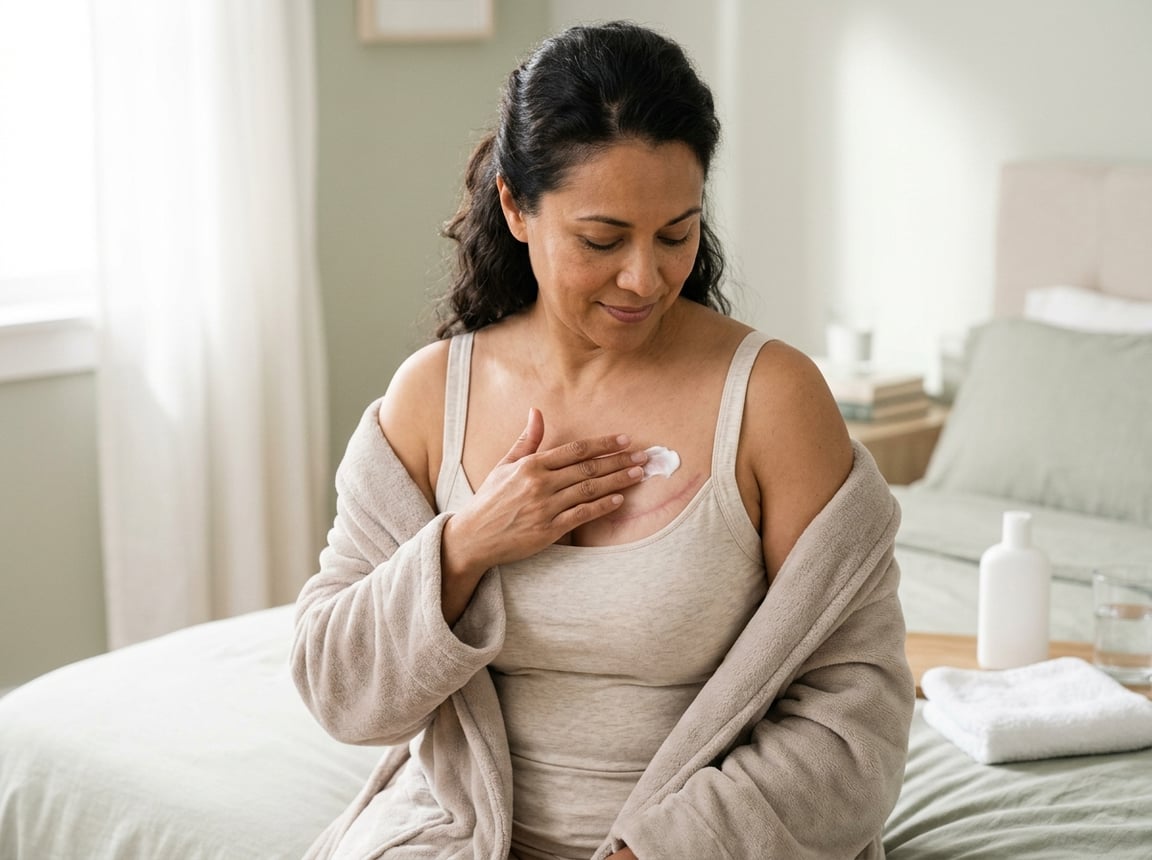
Your incision usually closes first, then the scar slowly changes in color, texture, flexibility, and sensitivity. Healing speed varies, so protect the area and follow your surgical team’s instructions before starting massage or applying products.
Early Healing and Wound Closure
During the first days and weeks, your incision may look red, swollen, raised, or uneven. You may also notice bruising, tightness, numbness, itching, or brief sharp sensations as nerves heal. Keep the area clean and dry as directed, and do not pick scabs or pull at adhesive strips.
Do not massage the scar, apply silicone, or use moisturizer until the incision has fully healed. The skin should have no open areas, drainage, or active scabs. Your surgeon may give you a different timeline, especially if you had reconstruction, drains, delayed healing, or radiation-treated skin.
Contact your care team if redness spreads, pain worsens, the area becomes hot, drainage develops, or the wound opens. These signs can point to infection or another healing problem.
Scar Maturation and Long-Term Changes
After the incision closes, your body continues building and reorganizing collagen for many months. The scar may feel firm, lumpy, tight, itchy, numb, or hypersensitive before it gradually becomes softer and less noticeable. It may also change from red or purple to lighter or darker than the surrounding skin.
Some scars remain raised and extend beyond the original incision. This is called hypertrophic scarring. It differs from a keloid, which can grow outside the wound’s edges. Tell your clinician if the scar keeps thickening, causes pain, limits shoulder movement, or pulls on nearby skin.
Numbness can last for months or longer after mastectomy. Gentle touch, prescribed massage, and physical therapy may help, but stop if you develop increasing pain or skin irritation.
Factors That Affect Scar Appearance
Your scar’s appearance depends on your skin type, genetics, incision location, surgical technique, wound tension, infection, and healing speed. Smoking, poor nutrition, uncontrolled diabetes, and repeated stretching can also slow healing or increase complications.
Radiation-treated skin may heal more slowly and remain dry, fragile, tight, or sensitive. Ask your oncology or surgical team before using massage, silicone sheets, adhesive products, or creams on irradiated areas. Use sun protection after the incision closes because ultraviolet light can darken a healing scar.
Breast reconstruction, wound separation, fluid buildup, and infection can change the final scar. Keep follow-up visits so your clinician can check healing and recommend treatment if the scar becomes painful, thick, or restrictive.
When and How to Begin Scar Massage
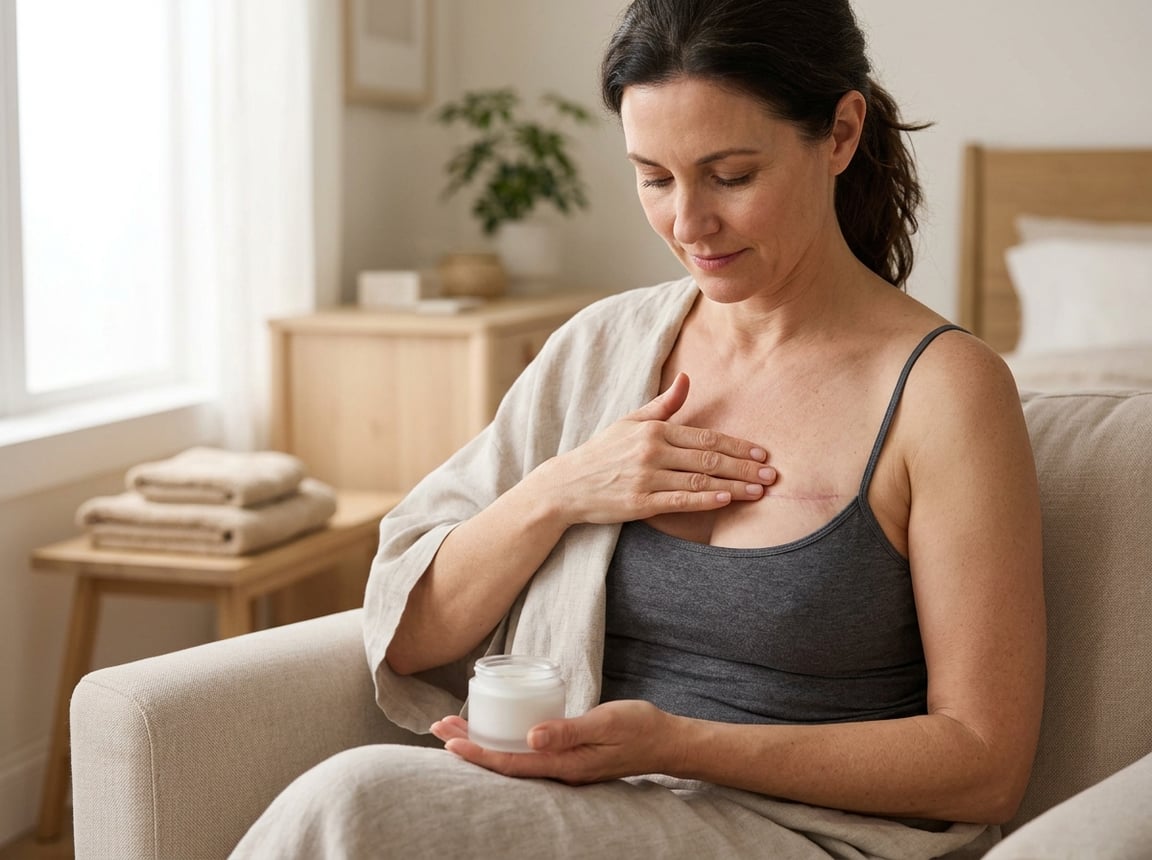
Begin only after your incision has fully healed and your surgical team approves massage. Use light pressure at first, protect sensitive areas, and stop if you notice pain, drainage, redness, swelling, or skin separation.
When to Start Scar Massage After Surgery
You can usually begin mastectomy scar massage when the incision is fully closed, dry, and free of drainage or scabs. The skin should have no open areas or gaps. Healing time varies, so follow your surgeon’s or breast care nurse’s instructions rather than using a fixed date.
Do not massage over fresh wounds, scabs, blisters, active rashes, or infected skin. If you have reconstruction, drains, radiation-related skin changes, or delayed healing, ask your surgical team when massage is safe. Contact your clinic if you develop increasing warmth, redness, swelling, drainage, fever, or worsening pain.
A Safe Mastectomy Scar Massage Technique
Wash your hands and use a small amount of plain, fragrance-free moisturizer if your clinician allows it. Lie or sit comfortably, then place your fingertips over the scar and begin with gentle circles on the skin around it. Gradually move across the scar without pressing deeply.
Use short horizontal, vertical, and circular movements. Massage for about five minutes once or twice daily, or follow your therapist’s plan. The area may feel numb, itchy, firm, or sensitive. These sensations can occur after surgery, but massage should not cause sharp pain, bleeding, skin damage, or lasting soreness.
Addressing Scar Tissue Mobility and Tightness
As healing continues, scar tissue can feel firm or attached to the layers beneath it. Gentle massage may help the skin and nearby tissue move more freely, which can reduce pulling during arm or chest movement. Work around the scar as well as directly over it when your incision can tolerate touch.
If your mastectomy scar tightness limits reaching, dressing, exercise, or sleep, ask for a referral to a physical or occupational therapist. A therapist can assess scar tissue mobility and teach safe stretching or manual techniques. Do not force a tight area or use deep pressure, especially after reconstruction or lymph node surgery.
Moisturizing and Silicone Scar Care
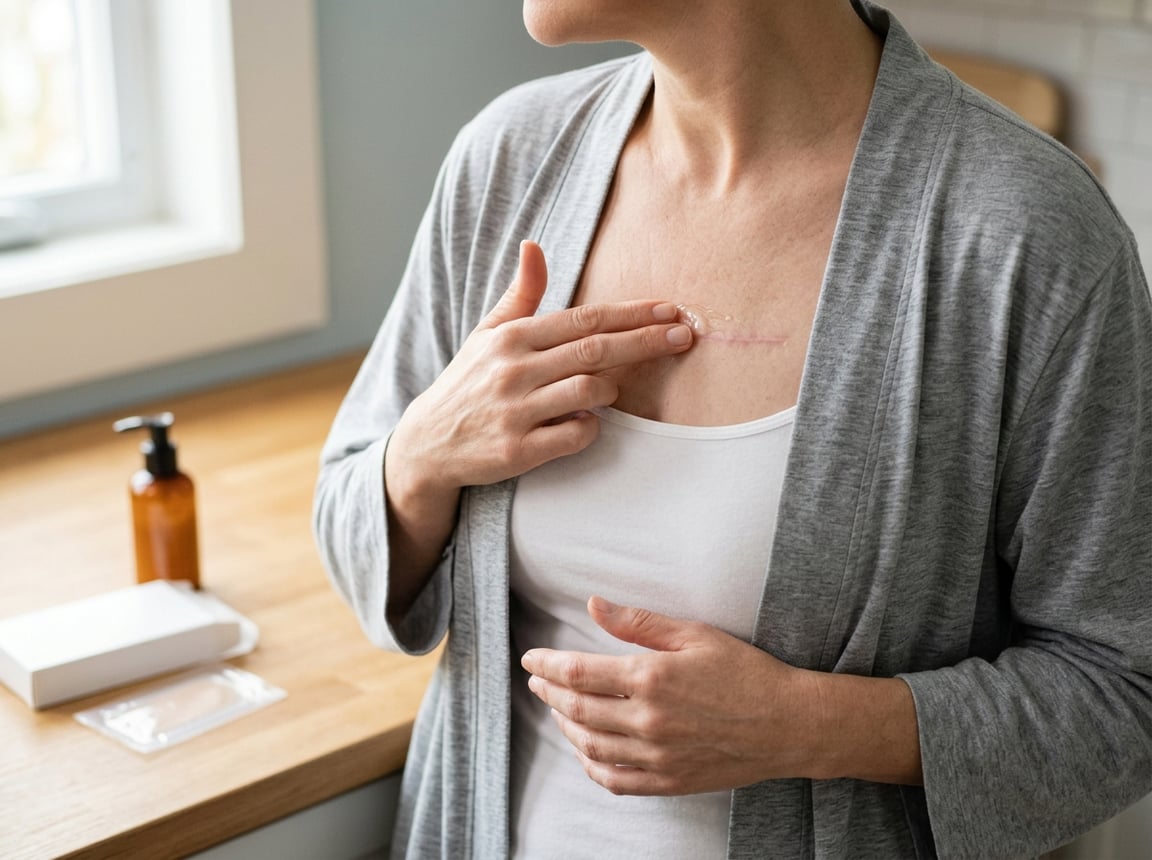
Use moisturizer to reduce dryness and tightness after the incision has fully closed. Silicone products may help soften and flatten a raised scar, while daily sun protection helps prevent lasting darkening.
Choosing the Best Moisturizer for Surgical Scars
After your surgical team confirms that the incision has healed, apply a fragrance-free emollient to dry or itchy skin. Choose a plain cream or ointment with ingredients such as petrolatum, glycerin, or ceramides. These products support the skin barrier without adding unnecessary irritants.
Apply a small amount with clean hands once or twice daily. Do not place moisturizer on an open wound, scab, draining area, or skin covered by surgical glue unless your care team approves it. Stop using the product if you develop burning, a rash, swelling, or worsening redness.
Moisturizer will not erase a scar. It mainly improves comfort and reduces cracking, dryness, and friction as the skin matures.
Using Silicone Gel and Silicone Sheets
Silicone gel for mastectomy scars and silicone sheets can help improve the look and feel of some raised scars. Start only when the incision has closed completely and your surgeon or wound-care team gives permission. Do not use silicone over infection, open skin, drainage, or an active rash.
Apply silicone gel as a thin layer to clean, dry skin and let it dry before covering the area. Follow the product directions for reapplication. Silicone sheets should fit the scar without extending far onto normal skin. Wear them for the time recommended on the label and remove them to wash both the sheet and your skin.
Check the area each day for itching, blisters, redness, or softened skin. Reduce wear time or stop use and contact your care team if irritation continues.
Protecting Scars From Sun Exposure
New scars can darken or become more noticeable after ultraviolet exposure. Once your incision has healed, cover the area with clothing when possible and use a broad-spectrum, water-resistant SPF 30 or higher on exposed skin.
Apply sunscreen 15 minutes before going outdoors and reapply at least every two hours, or more often after sweating or swimming. Avoid applying sunscreen to an open incision or recently sealed skin unless your clinician allows it.
A soft, tightly woven shirt can add protection, but clothing does not replace sunscreen on exposed areas. Continue protecting the scar during outdoor activities, even on cloudy days, because ultraviolet light passes through clouds.
What to Avoid During Scar Recovery
Your incision needs time to close and strengthen before you massage it or apply pressure. Protect the area from friction, harsh products, sun exposure, and habits that can delay healing or irritate sensitive skin.
Avoiding Premature Massage and Friction
Do not massage the scar until the incision has fully closed and your surgical team says it is safe. Avoid massage over scabs, open areas, drainage, or recently removed adhesive. Early pressure can pull on healing tissue and cause bleeding or irritation.
When massage is approved, use light pressure and stop if you feel pain, burning, increased swelling, or skin changes. Numbness is common after surgery, so you may not notice injury right away. Hypersensitivity can also make light touch uncomfortable; increase contact slowly rather than forcing the area to adjust.
Avoid rubbing from tight clothing, underwire bras, rough seams, and adhesive products. Choose a soft, supportive bra that does not press on the incision or reactive skin. If you had reconstruction, follow your surgeon’s specific instructions about compression and support.
Products and Habits That Can Irritate Healing Skin
Do not apply scar creams, silicone sheets, oils, perfume, alcohol-based products, or exfoliants to an open incision unless your clinician instructs you to do so. Test any approved product on a small area first, especially if your skin is numb, hypersensitive, or radiation treated.
Keep the scar covered from direct sunlight while it heals. After the skin closes, ask your care team whether you can use a broad-spectrum, high-SPF sunscreen. Sun exposure can darken a healing scar and may further irritate radiation-treated skin.
Avoid picking scabs, scratching, smoking, and soaking the incision in baths, pools, or hot tubs until your surgical team clears these activities. Keep showers gentle, pat the area dry, and avoid very hot water.
When to Contact Your Surgical Team
Contact your surgical team promptly if the incision opens, drains pus or blood, develops spreading redness, or becomes increasingly warm, swollen, or painful. A fever, foul odor, or sudden increase in drainage also needs medical advice.
Call if you notice a new fluid-filled swelling, a rapidly changing scar, or skin that turns pale, blue, purple, or black. Do not wait for a routine appointment when these changes appear.
Ask for guidance if pain, numbness, or hypersensitivity worsens instead of improving, or if radiation-treated skin becomes cracked, blistered, or unusually inflamed. Your team can tell you when to begin massage, which products are safe, and whether you need an oncology physical therapist.
Comfort, Clothing, and Safe Return to Activity
Soft fabrics, low pressure, and easy access can reduce rubbing and strain while your chest heals. Choose clothing that fits around drains or swelling and return to movement only when your surgical team allows it.
How Post-Surgery Bra Styles Differ
Post-surgery bras usually provide more coverage and less pressure than standard bras. They may have front closures, wide straps, soft seams, and adjustable bands. Many also include pockets for breast forms or temporary padding.
Unlike underwire bras, recovery styles avoid rigid wires that can press on the incision or irritate numb skin. Some bras offer light compression, but tightness is not always helpful. Your bra should feel supportive without causing pain, deep marks, swelling, color changes, or shortness of breath.
Look for moisture-wicking, breathable fabric if you sweat easily. You can shop post-surgery bras through medical clothing stores, specialty retailers, or some hospital programs. Check the return policy, since your size may change as swelling decreases.
Choosing Bras for the First Weeks of Recovery
Follow your surgeon’s instructions before wearing any bra. If your team approves one, choose a soft front-opening style that does not require lifting your arms or pulling fabric over your head. Wide straps and a broad, adjustable band can spread pressure more evenly.
Avoid bras that rub the incision, catch on drains, or press against surgical dressings. Wear the bra over any prescribed dressing unless your care team gives different instructions. Keep the area clean and dry and change the garment if it becomes damp or soiled.
Do not place silicone sheets, creams, or breast forms on a healing incision unless your clinician says the skin has closed enough. Stop wearing the bra and contact your care team if you notice increasing pain, drainage, redness, warmth, or swelling.
Managing Common Clothing Challenges
Drains can make shirts and jackets difficult to manage. Button-front, zip-front, or loose wrap tops let you dress without raising your arms high. A small drain pouch, pocketed robe, or belt designed for drains can help keep tubing from pulling.
Choose soft, smooth fabrics that do not catch on dressings or sensitive skin. Avoid tight armholes, rough lace, stiff seams, and heavy bags that press on your chest or shoulder. If one side feels uneven, a temporary pad or form may improve balance but use it only when approved.
Temperature changes, sweating, and numbness can also affect comfort. Wear removable layers and inspect your skin regularly, because numb areas may not signal pressure or friction normally.
Getting Back to Movement Safely
Begin with the gentle walking and arm movements your surgical team recommends. Short walks can support circulation but keep your pace easy enough that you can speak comfortably. Do not stretch, lift, push, or pull beyond your instructions.
Avoid lifting heavy objects, vigorous exercise, swimming, and activities that strain the incision until your surgeon clears them. If you have drains, protect the tubing and avoid movements that pull on the drain sites. Physical therapy may help restore shoulder motion, especially after lymph node surgery.
Stop and contact your care team for new swelling, worsening pain, drainage, fever, redness, or a feeling of pulling at the incision. Increase activity slowly rather than trying to regain your previous routine at once.
Frequently Asked Questions
Start scar care only after your incision has closed and your surgical team approves it. Use gentle pressure, plain moisturizer, and sun protection while avoiding friction, soaking, and products that irritate healing skin.
When can I start massaging my mastectomy scar?
Wait until the incision has fully closed, scabs have fallen away, and your surgeon confirms that massage is safe. If you had reconstruction, drains, radiation, or wound-healing problems, your start date may differ.
Do not massage an open area, scab, blister, draining spot, or infected skin. Contact your care team if you notice increasing redness, warmth, swelling, drainage, pain, or a fever.
How should I massage scar tissue after a mastectomy?
Wash your hands and apply a small amount of fragrance-free moisturizer. Use the pads of two or three fingers to make small circles over and around the scar, then gently move the skin up, down, and side to side.
Begin with light pressure for a few minutes. Gradually increase pressure only if your surgeon or physical therapist approves and the area remains comfortable. Stop if you feel sharp pain, new swelling, bleeding, or skin damage.
What moisturizer is safe to use on mastectomy scars?
Choose a plain, fragrance-free cream or ointment without alcohol, essential oils, or exfoliating ingredients. Apply it only after the incision has closed, unless your surgical team gives different instructions.
A moisturizer helps reduce dryness and allows comfortable massage, but it does not remove a scar. Test a small amount on nearby healed skin first, especially if you have sensitive skin.
How long does it take for mastectomy scars to heal?
The incision often closes within several weeks, but the scar can remain firm, raised, numb, itchy, or darker for months. Scar tissue may continue to change for 12 to 18 months or longer.
Healing can take more time after infection, poor blood flow, diabetes, smoking, radiation, or reconstruction. Your surgeon can assess changes that do not follow your expected recovery.
What should I avoid while my mastectomy incision is healing?
Avoid picking scabs, pulling on adhesive strips, or applying creams, oils, silicone, or other products until your surgical team approves them. Do not soak the incision in a bath, pool, or hot tub until it has healed and your clinician allows it.
Protect the scar from direct sunlight because new scars can darken or burn easily. Avoid tight clothing, vigorous stretching, and massage that causes pain or opens the skin.
Is it ever too late to massage mastectomy scar tissue?
It is usually not too late to ask about scar massage after the incision has healed. Massage may help with tightness or restricted skin movement even months or years later, but it cannot guarantee a smaller or less visible scar.
Ask a surgeon or oncology physical therapist to assess persistent pain, tightness, swelling, numbness, or limited arm movement. They can show you safe techniques, particularly after reconstruction or radiation.
Caring for a Scar Without Rushing It
Scar care is slow work, and starting too early is the most common mistake. Until the incision is fully closed with no scabbing, massage and most products do more harm than good and your surgical team is the only reliable judge of when that point arrives.
Once you're cleared, consistency beats intensity every time: a few minutes of gentle massage with a fragrance-free moisturizer, done daily, does more than occasional vigorous sessions. Scars keep changing for a year or more, so what you see at six weeks is nowhere near the final result.
The cautions are worth repeating plainly. Don't work on skin that's red, hot, weeping or opening. Don't massage radiation-treated areas without specific clearance, since that skin behaves differently. Keep the scar out of direct sun, which darkens healing tissue and is one of the few things that genuinely affects long-term appearance.
And pay attention to what sits against the scar all day - soft, seam-free, wire-free fabric reduces the friction that keeps a scar irritated. Our guide to bras that are gentle on reactive skin covers construction in detail, and the post-surgery collection is wire-free and soft-lined throughout.
0 comments