

Radiation therapy can leave your skin red, dry, and tender. You may notice swelling or areas that feel sore with even light pressure. The bra you wear during this time can either protect your skin or make discomfort worse.

The best bras during radiation therapy are soft, wire-free, seamless, breathable, and easy to put on without lifting your arms, so they protect sensitive skin while still giving gentle support. Fabrics like cotton or other moisture-wicking materials help reduce friction and keep skin dry. Front closures and smooth cups lower strain on treated areas.
As treatment continues, your needs may change. You may need extra softness, light compression, or pocketed styles for inserts after surgery. Understanding how radiation affects your skin helps you choose bras that support healing now and keep you comfortable long after treatment ends.
Understanding Skin Sensitivity During Radiation Therapy

Radiation therapy often changes how your breast skin looks and feels. These changes affect the type of bra you can wear and the level of support your sensitive breasts can tolerate.
Common Skin Changes and Challenges
Radiation targets cancer cells, but it also affects healthy skin in the treated area. You may notice redness, dryness, darkening, or mild swelling within a few weeks of starting treatment.
As treatment continues, your skin can become tender or warm to the touch. Some people develop peeling or a rash-like reaction. The skin may feel tight or itchy.
These changes make friction a serious concern. Seams, underwires, tight bands, and rough fabric can rub against irradiated skin and increase discomfort. Even small areas of pressure can lead to soreness.
Moisture also becomes a problem. Sweat under the breast can irritate fragile skin and slow healing. Breathable fabrics such as cotton and other soft, moisture-wicking materials help reduce this risk.
Because your skin barrier is weaker during treatment, you need gentle bras for irradiated skin that limit rubbing, heat, and trapped moisture.
Impact on Breast Comfort and Support Needs
Radiation can make your breasts feel heavier, swollen, or more sensitive than usual. Even light pressure may cause pain. This changes what “support” should feel like.
A bra for sensitive breasts should provide light to moderate support without compression. You want stability without squeezing. Wide bands and straps help spread weight evenly and reduce pressure points.
Front closures can also improve comfort. They let you put on and remove your bra without lifting your arms high, which may pull on tight or sore skin.
Underwires often press directly against the lower breast fold, a common treatment area. Many people switch to wire-free styles during therapy. Seamless cups and soft linings reduce friction on tender areas.
When your breasts are sensitive, the goal shifts from shaping to protection. The right bra supports you while keeping your skin calm and protected.
Choosing the Right Bra for Radiation Treatment
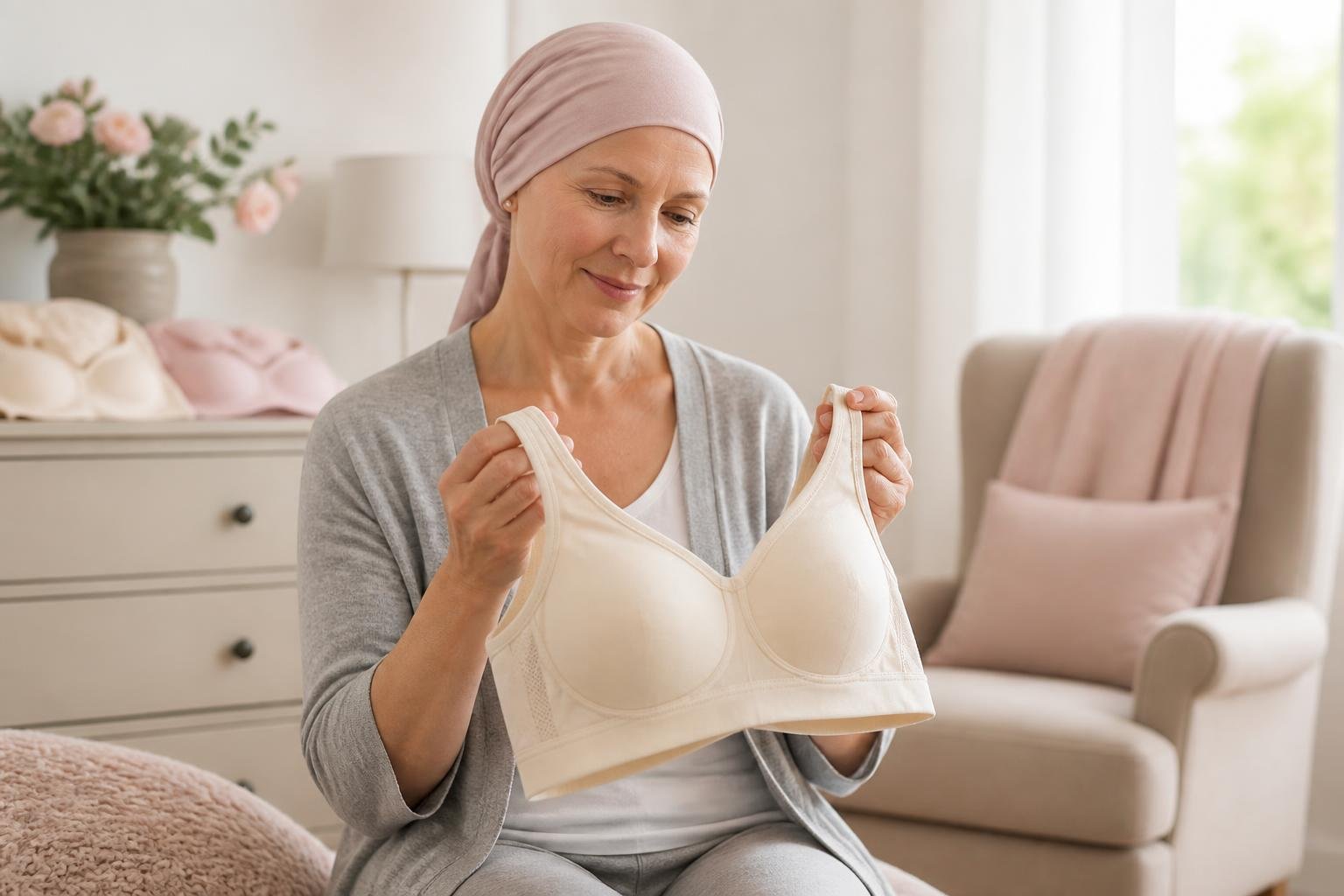
Radiation can make your skin red, dry, swollen, and tender. The right bra protects fragile skin, reduces friction, and supports your breasts without adding pressure.
Factors to Consider for Comfort and Protection
When choosing bras during radiation, focus on skin protection and gentle support. Radiation often affects the lower breast fold and underarm, so avoid bras that rub in these areas.
Look for:
- Wire-free designs to prevent digging into sore tissue
- Wide, padded straps to reduce shoulder pressure
- Soft bottom bands that do not roll or press into the skin
- Front closures if arm movement feels tight or painful
Some women use soft breast slings or cushions to lift the breast slightly and reduce skin-on-skin contact under the fold. This can help limit moisture and friction.
Comfortable bras during cancer treatment should feel secure but not tight. If you see deep red marks after removing your bra, it is too snug.
Importance of Soft Fabrics and Seamless Designs
Radiated skin reacts quickly to rough fabric and thick seams. Choose soft fabric bras for healing skin, such as cotton, modal, or other smooth blends.
According to Dr. Katie Deming, a cotton-modal-spandex blend is highlighted as especially comfortable because it adds stretch and moisture management.
Avoid:
- Lace or decorative trim
- Thick stitching across the cup
- Scratchy tags or labels
- Heavy elastic edges
Seamless cups help prevent rubbing on sensitive areas. A simple pull-on, wire-free bra with a smooth interior often works well during daily wear and sleep.
Non-irritating bras for therapy should allow airflow. Breathable fabric helps manage sweat, which can sting treated skin. If your provider recommends creams or ointments, pick bras you can wash often without damage.
Proper Bra Fit for Healing and Recovery
Your breast size and shape may change during treatment due to swelling. Recheck your fit every few weeks.
A proper fit means:
- The band sits level and does not ride up
- The cups hold your breast without gaping or squeezing
- The center lies flat without pressing hard
- Straps stay in place without digging
Do not size down for extra lift. Too much compression can increase discomfort and slow skin healing.
If you had surgery before radiation, you may have scar tissue or uneven fullness. In that case, lightly lined or stretch cups can adjust to your shape without pressure.
Bras for radiation therapy should support healing first and appearance second. Prioritize comfort, skin safety, and ease of wear each day.
Supportive and Gentle Bra Options
Radiation therapy can make your skin dry, tender, and easily irritated. The right bra can reduce friction, lift breast tissue away from skin folds, and give steady support without pressure.
Soft Bras for Sensitive Skin
Soft bras for sensitive skin use smooth, breathable fabric that does not rub or trap heat. Look for cotton, modal, or moisture‑wicking blends that pull sweat away from your skin. Seamless cups and flat stitching help prevent chafing in treated areas.
Choose wire‑free designs. Underwire can press into tender tissue and cause pain, especially near surgical scars or under the breast fold. A soft band with light stretch offers support without digging into your ribs.
You may also prefer:
- Wide, padded straps to reduce shoulder strain
- Front closures so you do not have to raise your arms
- Tag‑free labels to avoid itching
If your skin feels very sore, a soft bralette with gentle stretch can feel better than a structured bra. The goal is to protect your skin barrier while still giving a light lift.
Protective Bras for Treatment
Protective bras for treatment focus on shielding fragile skin and reducing friction. During radiation, the skin under and between the breasts can become red or moist. Lifting the breast slightly can help air flow and limit skin‑on‑skin contact.
Some radiation therapy bra support options include:
- Soft slings or cushions that tuck under the breast
- Bras with built‑in pockets for cooling inserts
- Designs made for radiation care with smooth inner linings
These features help keep treated skin dry and reduce rubbing. If you have a larger cup size, you may need firmer lower‑cup support to lift the breast off the chest wall without tight compression.
Avoid tight sports bras that press the breast flat against your chest. Gentle support works better than heavy compression during active treatment.
Comfort-Focused Bras During Therapy
Comfort-focused bras during treatment balance support and ease of wear. You need a bra that you can put on and take off without strain, especially if you feel tired after sessions.
Look for:
| Feature | Why It Matters |
|---|---|
| Front hook or zipper | Limits arm movement and shoulder strain |
| Adjustable straps | Let's you change the fit as swelling changes |
| Soft, wide band | Reduces pressure on ribs and treated skin |
| Light shaping, no padding | Avoids heat buildup and friction |
Your breast size and shape may change during therapy due to swelling or fluid buildup. Adjustable bras allow you to adapt without buying new sizes right away.
Radiation therapy bra support should feel secure but not tight. If you see deep marks on your skin after removing your bra, the fit is too firm.
Bras Designed for Post-Surgical and Post-Treatment Recovery
After surgery or radiation, your skin may feel tender, swollen, or sensitive to seams and pressure. The right bra can protect healing tissue, reduce strain, and make daily movement easier without rubbing or digging into your skin.
Mastectomy Bras and Their Benefits
Mastectomy bras are made to support your chest after breast cancer surgery, including lumpectomy, single mastectomy, or double mastectomy. Many styles include built-in pockets that hold a breast form or prosthesis in place. This design helps balance your posture and reduces shoulder and back strain.
Most mastectomy bras avoid underwire. Soft cups and wide bands lower pressure on scars and radiated skin.
Look for these features:
- Wire-free support
- Wide, padded straps
- Seamless or flat seams
- Soft, breathable fabrics
- Pocketed cups for prosthetics
Radiation can cause redness and peeling. Smooth linings and moisture-wicking fabric help reduce friction and keep your skin dry.
Some brands design mastectomy bras for different stages of healing. Early recovery bras focus on gentle compression and easy wear. Later styles offer more shape and structure once swelling improves.
Post-Surgery Bra Choices
Post-surgery bras support your chest after mastectomy, reconstruction, reduction, or augmentation. Doctors often recommend light compression bras in the first weeks after surgery. Compression helps control swelling and supports healing tissue.
Choose bras labeled for surgical recovery instead of regular sports bras. Recovery bras often include:
| Feature | Why It Matters |
|---|---|
| Front or side closures | Limits arm movement |
| Adjustable bands | Adapts to swelling |
| Wide underbands | Reduces pressure points |
| Soft elastic | Prevents skin irritation |
After radiation, your skin may react to rough elastic or tight seams. Pick bras made from cotton blends or other soft fabrics that allow airflow.
Avoid lace, heavy stitching, and tight underwire until your doctor says your skin has healed. Supportive bras for recovery should feel secure but not restrictive. You should breathe and move without pain.
Front-Closure Mastectomy Bras for Ease of Use
Front-closure mastectomy bras make dressing easier when your shoulder range of motion is limited. After surgery or during radiation, lifting your arms overhead can pull on scars and cause discomfort. A front clasp, zipper, or hook-and-eye closure reduces that strain.
You can fasten the bra while keeping your elbows close to your body. This design protects tender incision sites.
Many front-closure mastectomy bras also include:
- Adjustable straps in the front
- Wide, stable underbands
- Pocketed cups for breast forms
- Soft inner linings for sensitive skin
Some styles provide light compression for early recovery. Others focus on long-term comfort once swelling goes down.
Choose a snug fit that does not press into your scars. The band should stay level around your torso. When you find the right fit, you protect your skin and support healing tissue while staying comfortable throughout treatment.
Long-Term Comfort: Post-Radiation Bra Selection
Your skin and breast shape can keep changing for months after treatment ends. You need bras that adjust with you, reduce friction, and support healing tissue without pressure.
Evolving Needs After Completing Therapy
After radiation ends, your skin may stay sensitive, dry, or firm for several months. Swelling can take time to go down, especially if you had a lumpectomy. Some people notice tightness or mild size changes on the treated side.
You may need different post-radiation bra options than you wore during active treatment. Early on, choose soft, flexible bras with light support. As tenderness fades, you can move to moderate support if your breast feels heavier or uneven.
Look for features such as:
- Adjustable straps and bands to adapt to swelling changes
- Front closures if shoulder movement still feels tight
- Pocketed cups if you use a lightweight shaper
Avoid underwires until your skin feels fully healed and your doctor clears you. Wires can press on scar lines or areas that still feel firm.
Many breast cancer therapy bras now offer stretch panels and gentle compression. These designs help you feel supported without squeezing healing tissue.
Best Fabrics and Styles for Ongoing Care
Fabric choice matters as much as fit. Choose soft, breathable materials that reduce rubbing and manage moisture. Cotton blends and smooth microfiber work well for daily wear.
Seamless or flat-seam bras help prevent irritation along scar lines. If you had surgery, check that seams do not sit directly over incision areas.
Support level should match your comfort:
- Light support bralettes for home and sleep
- Wire-free supportive bras for work or errands
- Wide bands and straps to spread the weight evenly
Some brands design radiation bras with moisture-wicking fabric and soft linings. These features still help after therapy, especially if your skin feels warm or easily irritated.
Replace bras that stretch out or lose shape. A worn band can shift and rub, which may irritate sensitive skin. A well-fitted bra should feel secure but never tight, and you should not feel pressure at scars or along the lower breast fold.
Frequently Asked Questions
Radiation can make your breast skin red, dry, swollen, and sore. The right bra can reduce rubbing, manage moisture, and adjust to changes in size during treatment.
What bra features help prevent skin irritation and friction during radiation treatment?
Choose a wire-free bra with soft cups and light support. Underwire and stiff bands can press on tender skin and increase friction.
Look for flat seams or seamless designs. Raised seams and rough edges can rub against treated skin and cause discomfort.
Front closures can help. They let you put the bra on without lifting your arms high, which may pull on sore tissue.
Wide straps and a soft underband spread pressure more evenly. This reduces digging into swollen or sensitive areas.
Which fabrics and seams are most comfortable for sensitive or irradiated skin?
Soft, breathable fabrics like cotton or cotton blends work well. They allow airflow and help reduce moisture buildup on irritated skin.
Avoid lace, heavy elastic, and scratchy materials. These can trap heat and cause itching.
Choose bras with flat or covered seams. Seamless styles often feel best when your skin feels tender or raw.
If moisture is a problem, a light, breathable fabric that wicks sweat can help keep the area dry without feeling tight.
How should a bra fit if the breast is swollen, tender, or changing size during therapy?
Your bra should feel snug but not tight. You should not see deep marks on your skin after you take it off.
If your breast feels swollen, consider going up a band or cup size. Some women prefer bras with stretch to allow for daily changes.
Avoid strong compression unless your care team advises it. Gentle support is usually enough during radiation.
Check the fit often. Your size can shift during treatment, and comfort may change from week to week.
Are underwire bras safe to wear during radiation, or should they be avoided?
Most care teams suggest switching to a non-wire bra during radiation. Underwires can rub along the fold under the breast, which is a common area for skin irritation.
If you choose to wear an underwire, make sure it does not press into treated skin. Stop wearing it if you notice redness, pain, or skin breakdown.
During treatment sessions, your team may ask you to remove your bra. You can usually wear a comfortable, wire-free option the rest of the day.
What alternatives to traditional bras work well when the skin is painful or peeling?
A loose cotton camisole can feel better than a bra when the skin is very sore. It provides light coverage without tight pressure.
Some women use soft breast slings or cushions that sit under the breast to reduce skin-on-skin contact. These can help keep the fold under the breast dry.
A soft, non-restrictive crop top may also work. Choose one without tight elastic bands or rough seams.
If any fabric feels painful, going without a bra at home may be more comfortable, as long as your skin is protected from friction.
How can I wash and care for bras to reduce irritation and support healing during treatment?
Wash bras with a mild, fragrance-free detergent. Strong scents and harsh chemicals can irritate sensitive skin.
Rinse them well to remove soap residue. Leftover detergent can cause itching or redness.
Air-dry your bras when possible. High heat can stiffen fabric and elastic, which may make them less comfortable.
Have several bras in rotation. Clean, dry bras reduce bacteria and sweat buildup on treated skin.
Conclusion
Finding the right bra during radiation therapy is crucial for both comfort and skin protection. Radiation can leave the skin sensitive, so it's important to choose bras made from soft, breathable fabrics like cotton or microfiber to minimize irritation.
Look for bras with gentle seams, wide straps, and no underwires, as these features can help prevent further discomfort to the treated area.
Comfort should be your top priority, but don’t forget to look for support as well. Mastectomy bras or bras with pockets for prosthetics can also be a good option, offering both protection and additional comfort.
Always consider bras with adjustable features for flexibility as your body changes during treatment. With the right fit and fabric, you can stay comfortable and supported throughout your radiation therapy journey.
0 comments